Any question about the article?
Please use your work e-mail, so we can connect with you
We fish for trophy brown trout out of Oswego, New York, every year starting on June 1, and we have been doing it for almost 30 years. Notice I said trophy brown trout. Below I’ll explain why June is the month for the big ones, where they hold, and how we rig to get them in the boat.
Keep in mind that brown trout can be caught much earlier in the season. Weather permitting, you can target them as soon as the bays thaw and you can get a boat on the water.
Right after ice-out, many anglers and some charters head out onto the lake for browns, and the number of bites can be astounding. The catch is size: these fish tend to be smaller, for two reasons.
First, they are younger and haven’t been in the lake as long as the fish that are there in June. Browns grow fast, and two to three extra months add real length and weight. Second, the water is still cold early in the season.
Warmer water raises the metabolism of larger, older brown trout, and as the water warms, their need to feed goes up with it. Early-season water can be as cold as 40°F. By late June it’s common to find 62°F, and in our experience that temperature is ideal for getting mature, trophy-sized browns to bite. Our charter clients catch more trophy browns in June than in any other month.
Shallow water warms faster than deep water. Stained water from stream and river runoff, combined with warmer temperatures, is exactly what big browns look for at this time of year. As ambush predators and low-light feeders, they use the stained, warm water to hunt.
In June, alewives — the main forage for most Lake Ontario salmonids, browns included — move into the shallows by the thousands to spawn. Trophy browns know it. At no other time of year will you find concentrated baitfish, preferred water temperatures and colored water in the same places at the same time.
The feed bag is on, and when big fish turn on like this, they become vulnerable to a good presentation. It’s not unusual to land one and have it spit several alewives onto the back deck. They simply can’t stop gorging during the feeding frenzy.
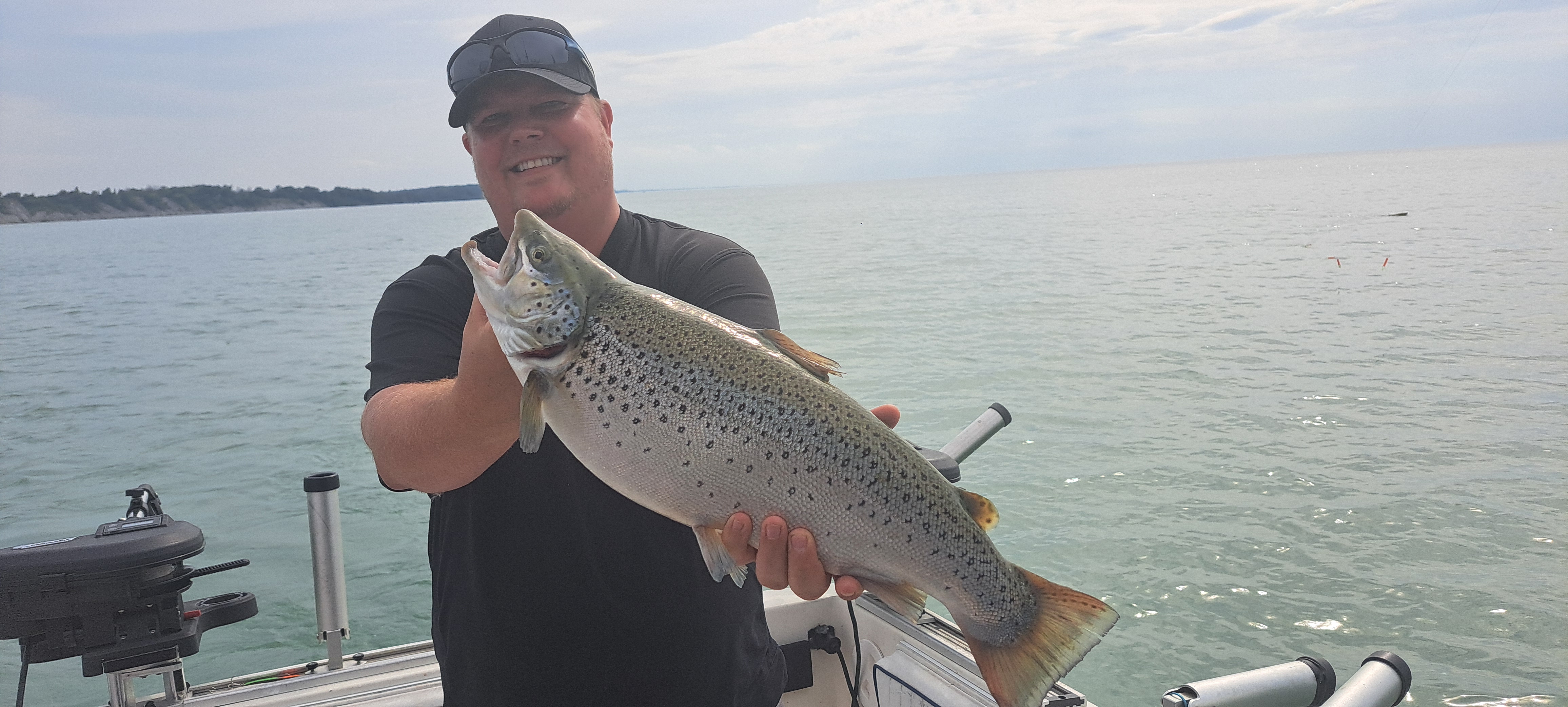
We usually target June browns in 5 to 25 feet of water, depending on water color, time of day and cloud cover. Planer boards and flat lines are our go-to presentations. Lead-core lines are run in segments, from single colors to multi-color cores, depending on where the fish are in the water column.
Notice I didn’t mention downriggers. Even when they are feeding hard, these fish are still a bit rigger-shy. Lines set away from the boat and stretched back 100 feet or more into undisturbed water are key to fooling the bigger fish.
Presenting the right lures the right way is what consistently puts fish in the boat. The right trout lures depend on the time of day, water clarity, sun or cloud, and the time of year. Depth and preferred water temperature matter too.
The single most overlooked factor is stealth. Line diameter matters much more than most anglers think. We usually leader down to 8-pound test, and drop to 6-pound when fish are really spooky and the water is gin clear.
Light line calls for rods and reels that complement it. Silky-smooth drags and light-action rods let the fish run when it needs to. Big browns are notorious for making long runs early and then bulldogging near the back of the boat at the end of the fight.
Set drags light so you don’t overstress the leader and the fish can run. A light-action rod bends well in the upper section and works as a shock absorber when a big brown jackhammers down.
As summer arrives, brown trout move to deeper water. A good rule of thumb is to fish where 55°F water meets the bottom. Whatever that depth is, browns are usually right on it or within 10 feet either side of that contour.
A chart plotter with accurate depth contours is a must for staying in the zone, and a fish finder that shows depth and marks fish sure helps too.
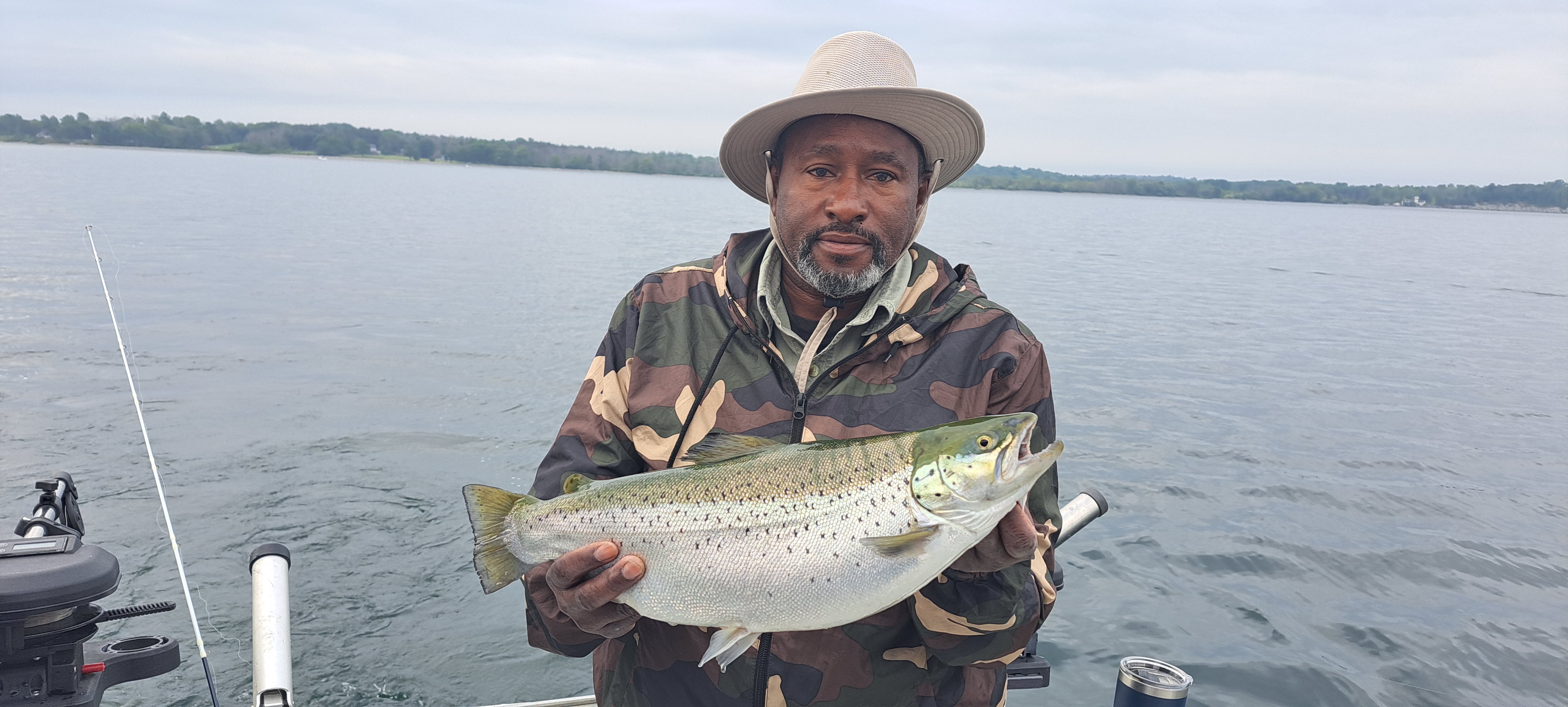
As the summer wears on and the water warms, browns go deeper still. Once they are below 25 feet, we add downriggers. The deeper we fish, the shorter the lines behind the balls: up high we run lines back 30 to 50 feet or more, and on sets below 50 feet we run them 10 to 25 feet back.
We let the fish tell us where they want it on a given day. Once we find a setup that’s working, we duplicate it until it stops.
Once September arrives, catching browns becomes a real chore. They get lockjaw and stop biting with any conviction. The urge to spawn, along with salmon eggs to feed on, draws them into rivers such as the Oswego and the Salmon River.
Based on this past season, the outlook for trophy browns on Lake Ontario is promising. Successful stocking and plenty of bait set the stage for another strong year. Salmon showed up around Oswego during the 2026 early brown trout season, and many recreational anglers and charter clients chose to chase them instead of browns.
That matters: there was very little pressure on Oswego’s browns, so more fish carry over and grow bigger. We’ll be back on them with Ace Charters out of Oswego next June.
June. The water warms to around 60–62°F, alewives move into the shallows to spawn, and runoff colors the water, so the biggest browns feed hard close to shore.
In June, 5 to 25 feet, depending on water color, light and cloud cover. In summer, follow the depth where 55°F water meets the bottom and fish within about 10 feet of that contour.
Go light. An 8-pound leader is a good standard, and 6-pound can make the difference when the water is clear and fish are spooky. Pair it with light-action rods and smooth, lightly set drags.
As spawning approaches, browns get lockjaw and start moving toward rivers such as the Oswego and the Salmon River, where they also feed on salmon eggs.