
Any question about the article?
Please use your work e-mail, so we can connect with you
Montana has some of the most famous trout water in the country, and most visiting anglers get only a few days on it. That makes choosing a guide the biggest decision of the trip. The right guide puts you on the right river for your dates, matches the day to your skill level and handles the logistics. The wrong one can turn a bucket-list trip into a long day of floating past water you never really fish.
This guide is specific to Montana and the rivers most visitors come for: the Yellowstone, the Madison, the Gallatin and the waters inside Yellowstone National Park. For the general questions to ask any guide anywhere, see our article on how to choose a fishing guide.
Montana’s rivers are big, cold and constantly changing. Snowmelt can turn a clear river into chocolate milk in two days, a hatch can move 20 miles upstream in a week, and summer heat can close a river to afternoon fishing. A local guide who is on the water every day knows which river is fishing this week, not last month.
Access is the other reason. Much of the best water is reached by drift boat, and some sections have their own rules: on parts of the Madison, for example, you can float but you can’t fish from the boat. Inside Yellowstone National Park the rules change again. A good guide handles all of this so you can concentrate on fishing.
Most outfitters have home rivers they know best. Before you compare prices, decide which water you want to fish, then look for guides who fish it all season.
The Yellowstone is the longest undammed river in the Lower 48, and the stretch through Paradise Valley near Livingston is classic big-river float fishing for brown trout, rainbows and native Yellowstone cutthroat. It’s wide, powerful and often windy in the afternoon, so an experienced oarsman matters. Livingston-based outfitters such as Greater Yellowstone Flyfishing Outfitters, who have guided the area since 1993, run guided fly fishing day trips near Yellowstone on the river in Paradise Valley as well as on waters inside the park, which is a practical setup if you want to fish both in one trip.
Below Quake Lake, the Madison runs as one long riffle for roughly 50 miles to Ennis Lake. It holds a lot of fish and a lot of anglers, especially in summer. Fishing from a boat is prohibited from the Quake Lake outlet to Lyons Bridge and from Ennis to Ennis Reservoir, so guides float those sections and stop to wade. Ask any Madison guide how they plan to avoid the busiest stretches on your dates and which sections they’re permitted to run.
The Gallatin tumbles out of Yellowstone Park through the canyon near Big Sky. It’s smaller and faster than the Yellowstone or the Madison, and most guided trips here are wade trips: pocket water, short drifts and plenty of rainbows and browns. It’s a good choice for beginners, families and anyone staying in Big Sky or Bozeman who wants a half day on the water.
Slough Creek, the Lamar, the Firehole and the Yellowstone itself inside the park are wilder and more technical, with native cutthroat in many waters and bison or bears on the bank. Park trips are usually wade or hike-in trips, and only outfitters authorized by the National Park Service can guide there (more on that below).
Montana’s season shapes everything. A guide who is honest about when their water fishes best is worth more than one who says every week is great.
The outfitter. In Montana, outfitters and guides must be licensed by the Montana Board of Outfitters, and guides work under a licensed outfitter. Reputable outfitters show their license number on their website and paperwork. If you can’t find it, ask.
Yellowstone National Park. To guide inside the park, a business needs a Commercial Use Authorization from the National Park Service, and its advertising must say it’s an NPS-authorized permittee. If a trip package includes park fishing, the ad should name the authorized outfitter who actually runs that day.
Your own license. Guided trips usually don’t include your fishing license. Outside the park you need a Montana Conservation License, an Aquatic Invasive Species Prevention Pass and a fishing license; for nonresidents, a full season costs about $117.50 in 2026, and short-term options are available. Our Montana fishing license guide covers the details. Inside Yellowstone National Park the Montana license isn’t valid: you need a park fishing permit, sold on Recreation.gov. Children 15 and under can fish in the park without a permit under the direct supervision of a permit holder, or get a free permit.
Most park waters open on the Saturday of Memorial Day weekend and, under the 2026 regulations, close on October 31, with a few year-round exceptions such as the Madison River between the state line and the West Entrance. Park rules are stricter than the state’s, including barbless hooks, lead-free tackle and catch-and-release for native fish, and they vary from one water to the next. In hot summers the park also closes some rivers daily from 2 p.m. until sunrise. A park-authorized guide keeps track of all of it, knows the trails and carries bear spray, which is reason enough for many first-time visitors to fish the park with one.
Float trips cover 8 to 15 miles of river in a drift boat, show you a lot of water and suit anglers who want to cast all day without walking. They’re the classic way to fish the Yellowstone and the Madison, usually with two anglers per guide.
Wade trips are slower and more instructional. They’re the better choice for beginners who want to learn to read water and mend line, for smaller rivers like the Gallatin, and for most fishing inside Yellowstone National Park.
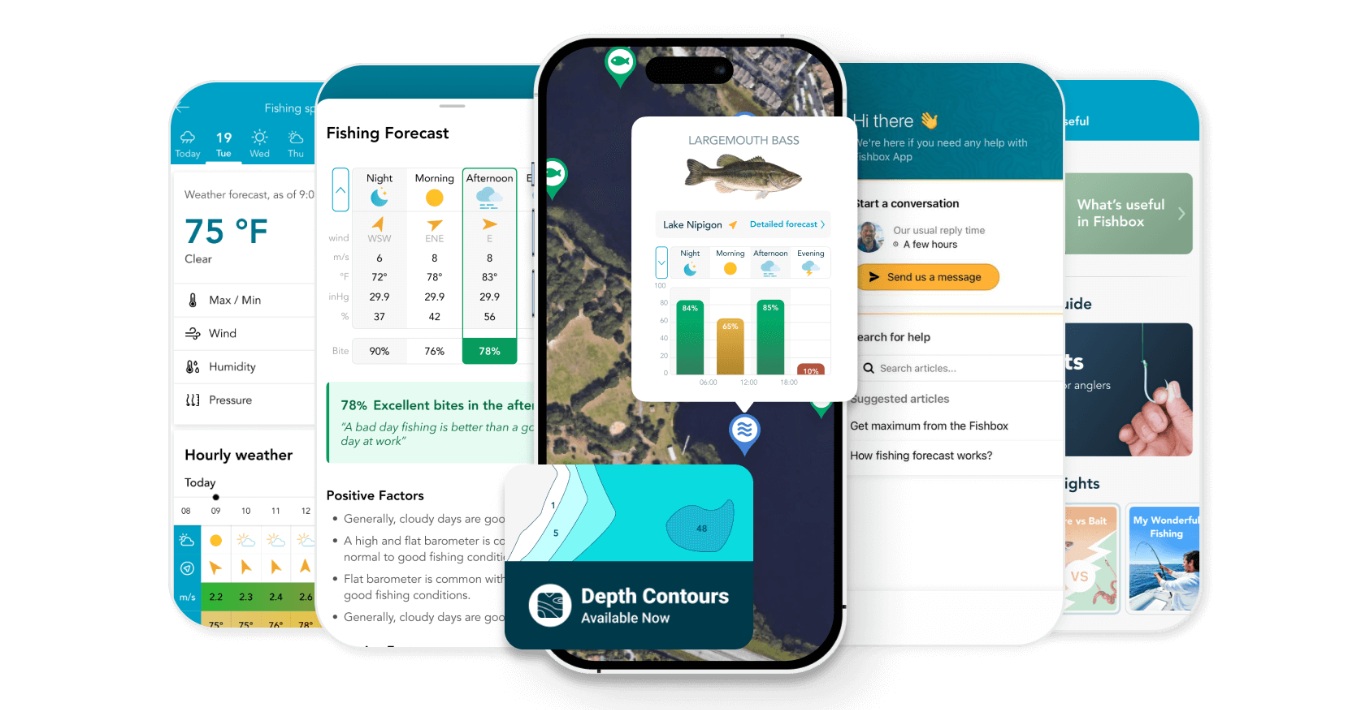
Your guide makes the final call on the day, but it helps to know what’s coming. Fishbox shows hourly weather, barometric pressure and bite windows for Montana rivers and lakes, and anglers log their catches on the same waters, so a week out you can see whether a front is moving in or the river is warming up. Sharing that with your guide makes for a better plan. For more on how pressure changes the bite, see our barometric pressure guide.
Tipping is customary in Montana: 15 to 20 percent of the trip price is standard for a good day, usually in cash and handed to the guide directly. Show up on time, be honest about your experience and listen when your guide adjusts your cast or your drift. That’s how a good day becomes a great one.
Yes. Outside Yellowstone National Park, every angler needs a Montana Conservation License, an AIS Prevention Pass and a fishing license. Most outfitters don’t include it, so buy it before your trip.
No. Yellowstone requires its own park fishing permit, sold on Recreation.gov. State licenses aren’t valid inside the park.
Late June through early July for the big stonefly hatches, and September through October for fewer crowds and big browns. Spring before runoff can be excellent but is weather-dependent.
For late June through August, book several months ahead. Spring and fall dates are easier to get, sometimes with only a few weeks’ notice.