

Rainbow Trout
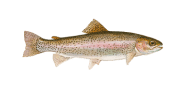
The rainbow trout is a highly sought-after freshwater fish known for its striking coloration and spirited fighting ability. It thrives in cold, clear streams, rivers, and lakes, making it a popular target for anglers worldwide. This fish's adaptability to various environments, including its anadromous form known as steelhead, adds to its appeal. Anglers appreciate its aggressive feeding habits, making it a challenging and rewarding catch.
 Length~50 (max 76)
 Weight~2 (max 9)
 WaterFresh, brackish, salt
 Water Temp10-16° F
 Depth200 ft
- Other names-
- Length~50 (max 76)
- Weight~2 (max 9)
- WaterFresh, brackish, salt
- Water Temp10-16° F
- Depth200 ft
Popular lures for Rainbow Trout

Regulation for Rainbow Trout
Living Conditions
🐟 Habitat preferences
- Rainbow trout prefer cold, well-oxygenated waters with plenty of cover such as submerged logs or overhanging vegetation
- They are often found in fast-flowing streams and rivers but can also thrive in lakes, especially near inlets where the water remains cool
- Their diet mainly consists of insects, small fish, and crustaceans, making them opportunistic feeders
- These fish often occupy areas with gravel bottoms, where they can forage and find protection
♻️ Life cycle and mating behavior
- Rainbow trout typically spawn in the spring, moving to shallow, gravel-bottomed areas of rivers or streams
- The fish dig depressions in the gravel, known as redds, where females lay eggs, which are then fertilized by males
- After spawning, adult fish often return to deeper waters or migrate downstream, with steelhead sometimes returning to the ocean
- Juveniles, known as fry, remain in shallow waters until they mature, gradually moving into deeper areas as they grow