
Any question about the article?
Please use your work e-mail, so we can connect with you
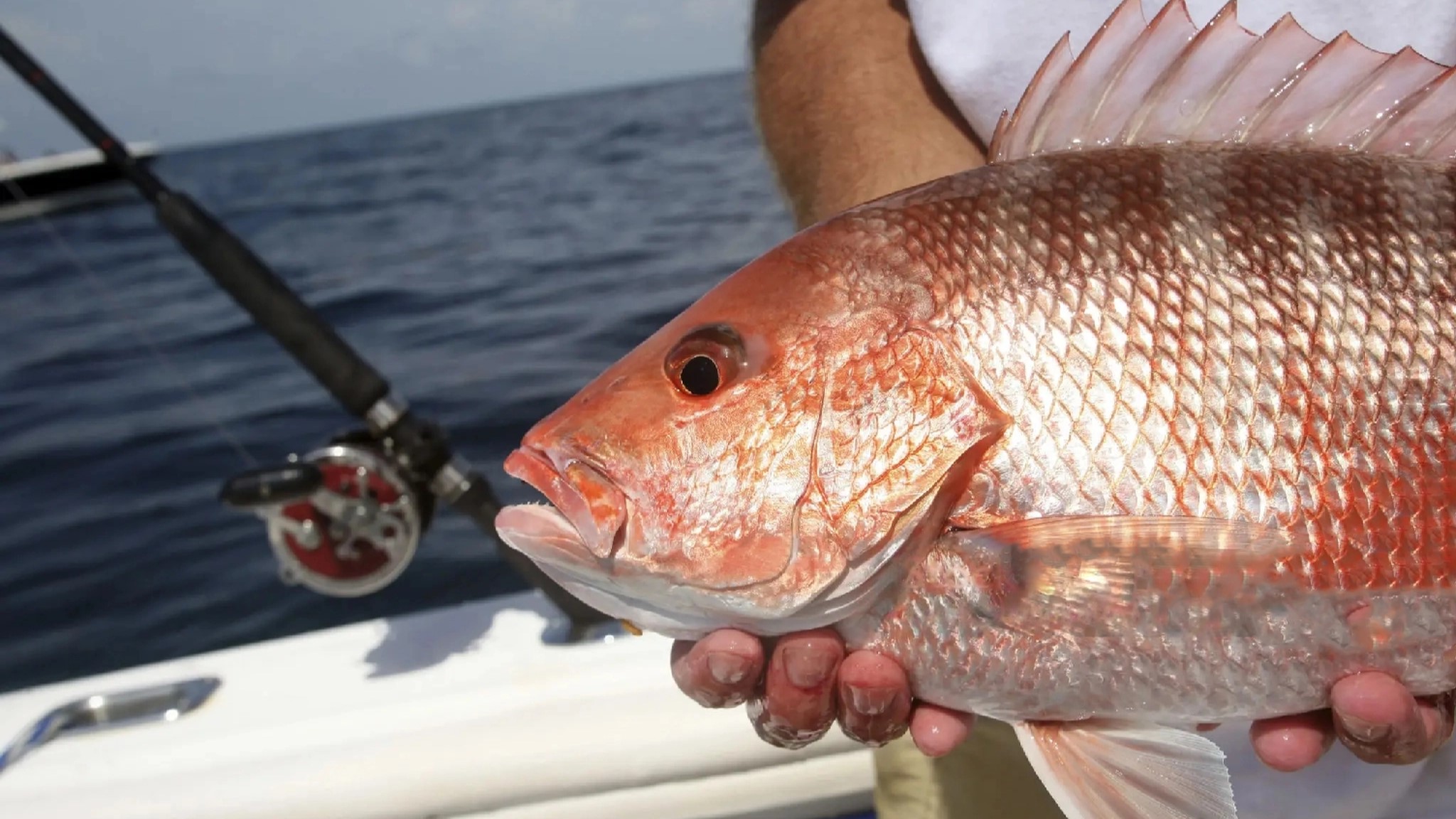
Red snapper is one of the most, if not the most, popular of the snapper species in the United States and maybe even in the world. Even while they are heavily regulated in a lot of states, these fish are highly sought after and targeted due to their fighting ability, size, and table fare, making them a great game fish. In this article, I’m going to go over a variety of topics related to fishing for red snapper, including tips and tricks on how to catch them, biological details, habitat, lifespan, baits, and more.
However, before I get into the article, I think it is important for me to highlight an important tool that I use when I am fishing on my own, be it for red snapper or any other species. This tool, as you might have guessed from reading my past publications, is the Fishbox App. This app is filled to the brim with helpful fishing information and data that can help you get on the fish quicker. One of my personal favorite aspects of this app is the weather metrics it gives based on the location at which you are fishing. This includes everything from temperature to lunar phase. Having this extra information can be extremely helpful as it can give you yet another edge on the fish. You may be skeptical, but I encourage you to at least give it a try. Additionally, you don’t even need to download the app yet—just take a free quiz for your very own personalized fishing map. So don’t wait; get one more step ahead of the fish with the Fishbox App and free personalized fishing map survey. Without any more delay, let’s jump straight into the article.
Before we get deep into the meat of this article, I think it is important to first get a grasp on the species we are targeting. This includes looking at its biology, habits, habitat, value, and more. Without more delay, let’s look at what makes this fish so awesome.
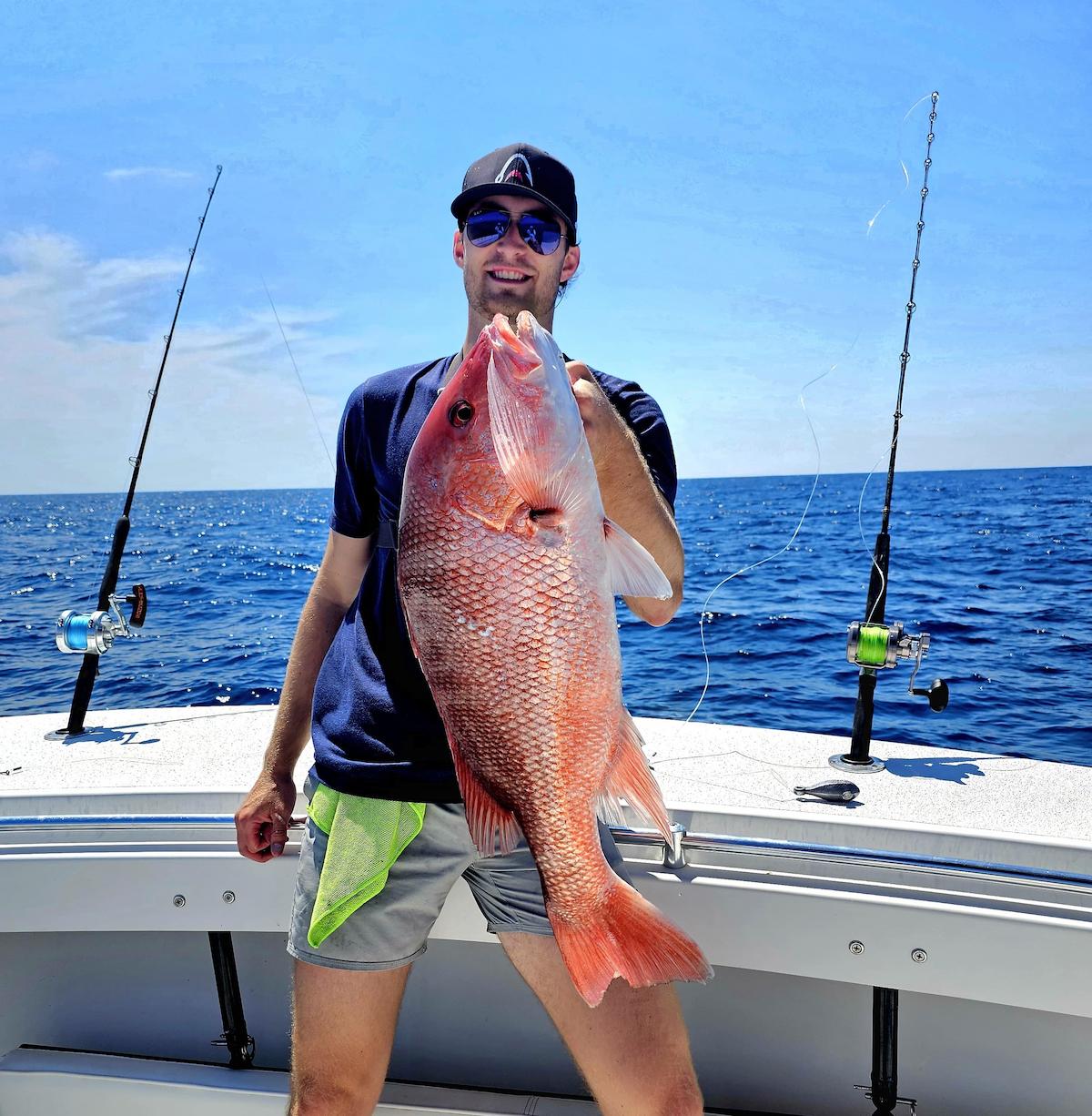
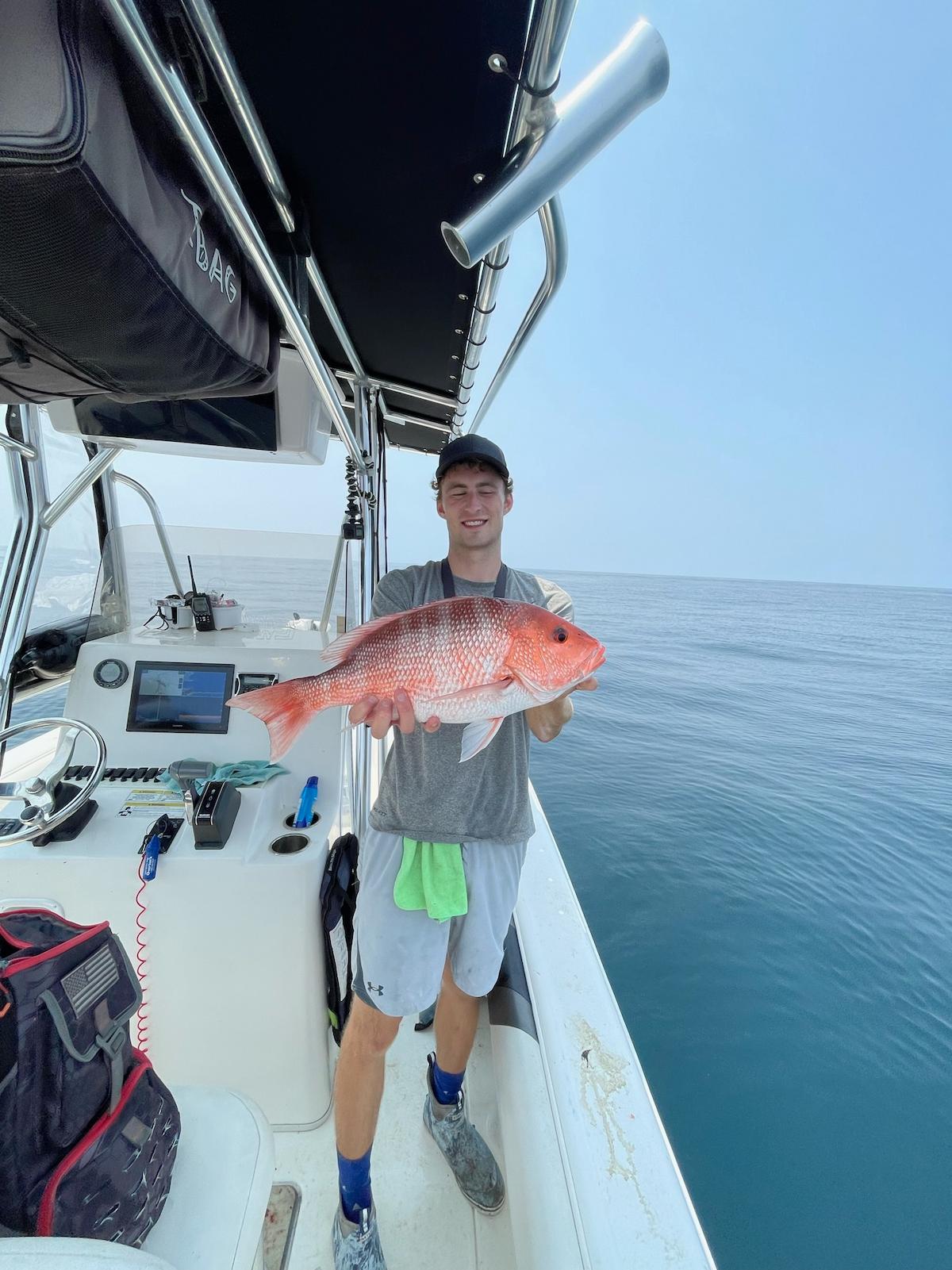
Biology: While the government and various organizations deem the red snapper an “endangered species,” many of us anglers know the real truth. These fish are just about everywhere in the Southeast Atlantic Ocean and Gulf with any twinge of structure. Red snapper tends to populate areas with live or artificial bottom like reefs and wrecks. Additionally, it should be known that you rarely find one of these things alone. They’re constantly schooled up. Here in North Carolina, there are some spots so overrun by red snapper that you can’t get a bait down on the bottom in front of anything else. Okay, enough rambling. The red snapper, when caught, is typically between 10 to 20 pounds and on average lives about 40 to 50 years. These fish fight ridiculously hard and are frequently put very high on the list in terms of pound-for-pound pulling power. Lastly, the red snapper can grow extremely quickly, especially in its first few years of life. This allows them to reach maturity quickly and the size at which they can decimate bait populations at spots (1).
Value: In addition to the incredible biology of red snapper, these fish also have excellent value as both table fare and a sport fish. In my opinion, and among most anglers, red snapper is close to the top of the list for the best-tasting fish and can frequently be ordered at most seafood restaurants. While these fish are super tasty to eat, they also are extremely fun to catch. If you hook up to a bigger one of these things, I can assure you that you will know. The second they feel the hook, they will let you have it and try to get in the rocks. And unlike grouper, who fight that first 10 to 20 feet off the bottom, red snapper will fight all the way to the top. Keep in mind these fish can get huge. If you hook one above 20 pounds, I can assure you that you are gonna feel it the next day. Hopefully, you can see just from reading this that there are good reasons why this fish is extremely sought after (2).
Before I get into the section on the timing aspects of fishing for red snapper, it’s important to note that some of these details may vary depending on where you are targeting red snapper. These time frames can differ when fishing somewhere like North Carolina compared to the Gulf of America.
Below is a summary chart that takes into account everything discussed in detail throughout this section. If you’d like to know the specifics, by all means, read the entire section. However, if you’re in a time crunch and just need the broad overview, take a glance at the table and move on. Without any further delay, let’s get into the meat of this section.
| Region / Season | Water Temperature | Behavior | Best Tactics | Notes |
|---|---|---|---|---|
| Gulf of Mexico – Spring | 68–75°F | Move from deep to reefs; feed heavily before spawn | Jigs and live bait near structure | Calm seas and active fish |
| South Atlantic – Spring | 65–75°F | Move inshore from deep winter spots; strong feeding | Light tackle bottom fishing | Good pre-summer action near reefs |
| Gulf of Mexico – Summer | 75–85°F | Peak feeding and spawning on reefs | Bottom fishing with cut or live bait | Main open season; deep reefs best |
| South Atlantic – Summer | 75–82°F | Spawn offshore; aggressive early and late | Cut bait or live menhaden on reefs | Check open federal days |
| Gulf of Mexico – Fall | 70–78°F | Post-spawn feeding; move slightly deeper | Slow-pitch jigs and squid | Consistent bite, mild weather |
| South Atlantic – Fall | 70–75°F | Feeding before winter; steady action | Jigs, squid, and live bait | Ideal weather and bite |
| Gulf of Mexico – Winter | 60–68°F | Hold deep and sluggish | Heavy rigs, vertical jigging | Rough seas, limited access |
| South Atlantic – Winter | 60–68°F | Deep and less active | Deep drop bait rigs | Cold fronts limit fishing windows |
Read also: Your Comprehensive Guide to Red Snapper Season
Overall, hopefully you can see that time of year matters so you should plan accordingly (3).
Because red snapper are a species of bottom fish, the time of day doesn’t matter as much as it does with other saltwater species, but it definitely does have some effect. From both my own personal experience fishing for red snapper and the research I have done, the best times of day for targeting them are early morning and late afternoon into the evening. For just about every species, this holds true, but there are some exceptions. With red snapper, though, don’t worry too much about the time of day as opposed to other more important factors like bait and structure. If you have the right bait and structure, the time of day really won’t matter at all (2).
The best fishing conditions for red snapper are when you have calm weather and warm water, among some other factors. The reason we want calm weather is that we want good bait presentation. If our boat is bouncing up and down, our baits on the bottom will be bouncing up and down on the bottom and won’t look natural at all. Thus, we want calmer weather. Additionally, we also want warm water because that is when the red snapper will bite the best. Like I mentioned earlier, the warmer the water is, the more aggressive the red snapper get. Some anglers will say that sun or cloud cover has some effect, but when you bottom fish, those fish are far enough down that I really don’t believe—or have seen—that it honestly matters that much at all. This may seem like news to some, but you also have to realize these fish are often going to be at least 60 feet down in the water, where surface weather isn’t as much of a factor or concern. The single biggest thing is calm weather in terms of wave height (2).
Red snapper tend to spawn anywhere from late spring to early fall. While this range can seem broad, it does take into account the widespread nature of this species and how spawn times will differ based on different locations in the world. Additionally, it should be noted that red snapper feed more before spawn to prepare, and some evidence even suggests that these fish may return to the same spawning grounds year after year (4).
Red snapper can be targeted and caught all over the world. That being said, here are some of the best and most well-known spots for targeting these popular gamefish.
The snapper family is one of the largest families of fish in the entire world. In fact, there are hundreds of different species of fish that are classified as snappers. Although this article is focusing on red snapper and how to catch them, I do believe it is important to give some brief attention to the other popular snapper species you may run into while you are fishing (1).
There are a variety of different baits you could choose from when fishing for red snapper. In this section, I’m going to break them all down for you to make it easier to process.
In general, live or dead baits are going to be the preferred option for the majority of anglers, but there is definitely still success to be found when using a couple different kinds of artificial baits.
Dead baits can also be another highly effective strategy for catching red snapper out on the open water. Red snapper are not too picky, so let’s get into some of the popular dead and cut baits that you can use to target these fish. Additionally, I would like to note that it is important that these baits are presented on or near the bottom because that’s where these snappers will be hanging around (5).
Keep in mind that there are also other baits that can work for red snapper but only a few of the more popular baits are listed here.
Red snapper are not very picky at all when it comes to live bait. If the bait swims, it will likely be a meal for any red snapper close to it when presented correctly on the bottom. In this section, I’m not going to cover all of the different types of live bait you can possibly use for red snapper, but I will cover some of the more popular ones (6).
Once again, I only mentioned a few of the more popular live baits for red snapper, but others do exist, such as cigar minnows, speedos, etc. Essentially, if the bait can fit in a red snapper’s mouth, then it will likely be eaten.
Unlike other species of fish, there are only a few main ways that we can use to target red snapper. In this section, I’m going to break them down for you so that you can determine which methods are best for you and what you may want to try next time you’re on the water (6).
In summary, your best bet for catching red snapper is going to fall into two categories. If you know the fish are there, you’ll want to anchor. If you don’t know precisely where the fish are, drifting is going to be your best friend because you can cover more ground with it. Lastly, I would encourage you to try different techniques to see what the snapper want, be it changing up baits or tactics.
Once again, this gear section is probably where most people may have differing opinions. This is totally okay, though. A lot of fishing comes down to preference. I would say once you get past a certain threshold in rod and reel power, the choice is really yours to make in terms of gear. In this section, I’m just going to give you some of the more popular choices and what I personally have used for red snapper.
For conventional reels, I prefer the Daiwa Saltiga 40 LH two-speed reel (7). While this is a very pricey reel, it is a lifetime reel and is constructed very well. One of the best parts about it is the fact that you can toggle between high and low gear, which makes turning the handle easier when fighting a fish with a ton of drag. Yes, there are certainly cheaper options, but I love the Saltiga, and I know it can handle anything that gets hooked on it.
Electronics are massively helpful when it comes to bottom fishing, especially if you are trying to find new spots or even make it back to old ones. Knowing how and when to use these devices can determine whether or not your day on the water is a success or a failure. When using your sonar/depth finder to locate good bottom to fish for red snapper, you’re going to want to focus on the first 10 to 20 feet off the bottom on your screen. You want to see “marks” in this area, symbolizing that there is bait on the bottom. Follow the bait, and you will find the fish. Rinse and repeat this process at various spots to see what is down there. If red snapper are on that bait, it shouldn’t take too many baits to find out because of how aggressive they are. However, a word of warning: not all bottom marks mean that there are predatory fish. You have to experiment and fire down baits to figure this part out.
Here we are once more, and I’ll say it again—this question really comes down to a couple of different factors such as time, money, and pride. If you have the money, don’t have a lot of time, and just care about catching some red snapper, a charter is going to be the way to go. However, if you’re someone who isn’t a big fan of spending money on a charter and would rather try to catch a red snapper by yourself, then by all means, try it on your own. In any case, I personally don’t have a problem with a charter, especially if I’m new to an area or it’s a new species I’m targeting. The question I always ask myself is how much better the charter is going to put me on fish as opposed to my own efforts, and then I determine from there if I think the charter is worth it. One last thing to consider is your access to the species. Given that red snapper are often found in deeper offshore waters, your backwater skiff may not be able to make it to them. That being said, either find a buddy with a boat that can push offshore or go ahead and head out on a charter.
Part of being a respectable and good angler is following the rules that are in place. This means following the rules regardless of how we personally feel about them. With red snapper, this issue is particularly large in North Carolina, where we as recreational anglers are only allotted two days a year to catch red snapper because the population is endangered. Now, I know I’ve cracked jokes in this article about the quantity of red snapper available, but that does not give me an excuse to break the rules. And if you do break these rules, you are doing so at your own expense, risking your fishing license being taken and incurring fines or further punishment.
At the end of the day, God calls us to respect those in authority over us, and this is one particular example where we get to do so. These rules may not seem fair or reasonable, but we need to follow them out of respect for those above us—be it in the government or God.
Lastly, I would also like to mention that these regulations vary from state to state. This means that when fishing somewhere for red snapper, you need to check the local and federal regulations to see what is allowed. Additionally, sometimes equipment is required on the boat if you are snapper fishing, such as a way to release the fish at depth so that they don’t die of barotrauma and can’t swim back down. So pay attention to these rules and follow them.
Normally, the best time of year to catch red snapper is in the summer months when the weather is warm and the water is also warm. This varies a bit from location to location. Additionally, just because the fishing is good for red snapper doesn’t mean you can keep them, so pay attention to local rules and regulations.
Here in North Carolina, our red snapper can be found anywhere from 50 to 200 feet of water. Once again, this is going to heavily vary based on the location, but in general this remains true.
In short, the reason why red snapper is so expensive is because there is a very high demand for it due to limited supply and recreational fishability across the country. This drives up the prices as many people can’t fish for them very often.
This is a bit of a tricky question because it’s not really about how far offshore you go but more about the depth of the water. In some places, you may have to go less than a mile to catch red snapper, and in other places, 20 miles or more. However, at the end of the day, you’re still looking for that 50–80-foot range of water depth before you can confidently say you’ve gone far enough.
It depends on the bait you are fishing. If you are fishing a whole dead bait or a live bait, hook through the nose or lips of the bait. If you are fishing a live bait, you can also hook above the anal vent, in the tail, or below the dorsal fin as well. When fishing with cut bait, just try to poke your hook through the center of the piece so that it looks normal and not smushed.
The best rig for red snapper fishing is going to be a simple 3-way rig. One part of the three-way swivel attaches to the leader, which goes to a hook. Another part goes to some line tied to the weight, and the other part is tied or crimped to the main line.
The Gulf waters of Texas are very lucrative for catching red snapper, so you should have no problem finding them there at all. In fact, it is some of the best fishing for red snapper in the world.
Yes, the caveat is that you are fishing in season and with the right gear. The reason why I can’t necessarily say a date is because these dates, when the red snapper season is open, change each and every year for the most part. Stay up to date by following your local state regulations to see when you can fish for red snapper.
I hope you guys have enjoyed reading this article and learning more about red snapper and their habits, preferences, and typical behaviors. I hope you can take this information to heart and learn from it in hopes of making your days on the water more successful. Remember, this success won’t happen overnight and requires lots of time on the water to really figure this stuff out. If you have any questions or comments, please feel free to reach out. As always, good luck and tight lines!
Pierce Latta has been passionate about fishing since the age of three, growing up casting lines in both freshwater ponds around Charlotte, NC, and the saltwater of Ocean Isle Beach. With nearly 16 years of experience, he’s explored almost every style of fishing imaginable, from fly fishing and surf casting to offshore and inshore adventures. Pierce now shares his knowledge and enthusiasm with others, offering tips, techniques, and inspiration to help anglers of all levels discover the thrill of fishing.