
Any question about the article?
Please use your work e-mail, so we can connect with you
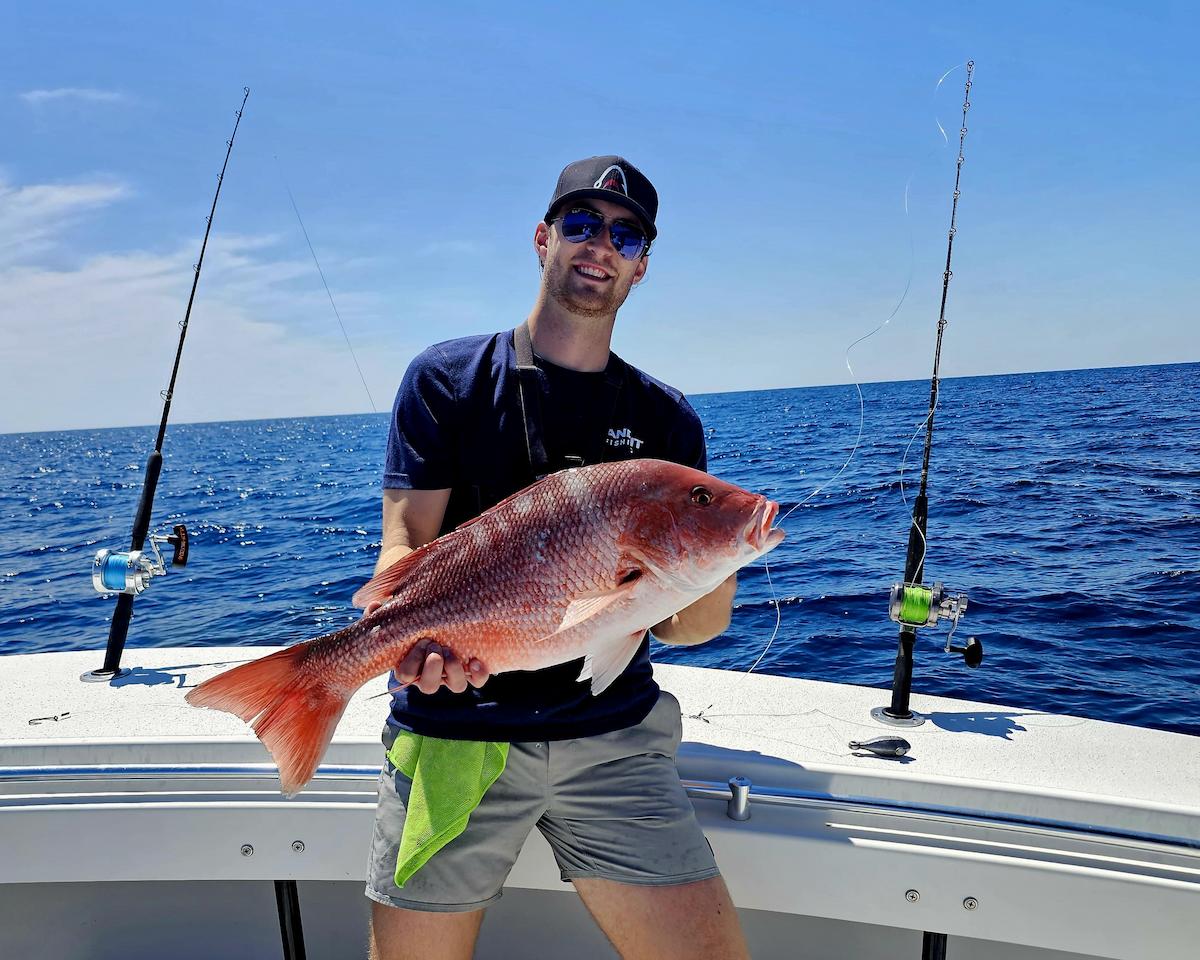
Red Snapper are not only beautiful to look at, but they’re also fun to catch and delicious to eat, and because of strict harvest rates and seasons, they’re easily one of the most in-demand fish along the Gulf of Mexico.
Easily recognized by their distinctive bright pink or red skin, the Red Snapper season is highly anticipated each year. Anywhere you fish along the Gulf of Mexico is going to be great for catching them, but understanding when you can fish and your size and bag limits is extremely important.
Since the decline in the Red Snapper population, state and federal agencies have been closely monitoring the population along the Gulf of Mexico. In the following guide to Red Snapper seasons, we’ll cover:
If you’re planning a destination fishing trip to North Carolina, then check out North Carolina Fishing Seasons: Your Comprehensive Guide to learn more about the excellent fishing opportunities North Carolina has to offer anglers!
Discovering the best time to catch Red Snapper will be much easier now, but finding the best spots, such as those secret local spots can be a lot more difficult. Without some secret local knowledge, you’re going to be up against the odds. However, thanks to the Fishbox App, a premium Fishing Forecasting App, you’ll know the best time to get out on the water and start landing some of those Red Snapper, including when they’re most active and secret local fishing spots.
According to the Florida Fish and Wildlife Conservation Commission (FWC), Florida’s 2025 recreational private Gulf Red Snapper season will open for fishing over Memorial Day weekend (May 24–26). It will then reopen on June 1 and continue daily through July 31.
For the fall, harvest will be allowed daily from September 1–14, after which the season switches to 3-day weekends (Friday–Sunday) for the rest of the year, with special holiday openings on Veterans Day (Nov 11), Thanksgiving (Nov 27), and Christmas Day (Dec 25).
It’s important to note that a regulation update from the FWC now requires all boats fishing for reef fish in state waters to have a descending or venting device on board and rigged ready for use. The rule also requires the use of a descending device or venting tool if a fish is showing signs of barotrauma before release.
Read also: Complete Guide to Florida Fishing License
Bag limit: 2 Red Snapper per person (this is included in the 10-fish per-harvester per day state snapper aggregate bag limit).
Season dates for 2025 (private recreational anglers, from private vessels, state & federal Gulf waters unless noted):
Fall schedule:
Bag limit: 2 Red Snapper per person (state regulation).
Federal Atlantic limit: 1 Red Snapper per person when under federal jurisdiction. 2025 season: State waters open year-round. Federal Atlantic season dates are still to be determined.
According to the Alabama Department of Conservation and Natural Resources, the Alabama Red Snapper season in state and federal waters for private anglers will begin Friday, May 23, 2025, and run seven days a week through June 30, 2025. Fishing will be open from 12:01 a.m. on May 23 until 11:59 p.m. on June 30, 2025.
Starting Friday, July 4, 2025, the season will shift to four-day weekends (Friday–Monday) until the private angler quota is projected to be met.
It’s important to note that Alabama requires anglers to report their Red Snapper, Greater Amberjack, and Gray Triggerfish harvest via Snapper Check. In addition to your Alabama saltwater fishing license or saltwater angler registry, you’ll also need a Reef Fish Endorsement to land reef fish in Alabama.
For-hire operations differ slightly: operators of vessels with an Alabama Commercial Party Boat License without federal for-hire permits must follow the state season, hold a Gulf Reef Fish Endorsement, and are limited to fishing inside the 9-mile state waters line. Finally, remember that the DESCEND Act, effective since January 13, 2022, requires all anglers to carry a descending device or venting tool when fishing for or possessing reef fish in federal Gulf waters.
According to the Louisiana Department of Wildlife and Fisheries (LDWF), the private recreational Red Snapper season opened on Thursday, May 1, 2025, in both state and federal waters. The season runs seven days a week with a daily bag limit of four fish per person and a 16-inch minimum size limit.
As of September 14, 2025, LA Creel estimates indicate that 817,535 pounds (91.4%) of Louisiana’s 2025 private recreational allocation of 894,955 pounds have been landed. With less than 10% of the annual allocation remaining, LDWF has cautioned that a season closure could occur as early as the first or second week of October as updated landings data become available.
Licensing requirements:
All resident and non-resident recreational anglers must hold a valid Louisiana Basic and Saltwater Recreational Fishing License, along with a free Recreational Offshore Landing Permit (ROLP), in order to fish for or possess Red Snapper. Anglers can save an electronic copy of their ROLP on a mobile device, use LA Wallet, or carry a printed copy while fishing offshore.
Charter regulations:
LDWF urges anglers to use descending devices to help reef fish survive release by returning them to depth. Federal law requires anglers to have a descending device or venting tool rigged and ready for use when targeting reef fish in federal waters.
According to the Mississippi Department of Marine Resources (MDMR), the 2025 Red Snapper season will open to private recreational anglers fishing and state-for-hire boats at 12:01am, Friday, May 23rd, 2025, and will close on July 6th, 2025, at 11:59pm. Anglers landing these fish in Mississippi are allowed to harvest two per person per day with a 16-inch minimum size.
The MDMR would like to remind all anglers that they must follow the regulations of the state in which they plan on landing their catch of Red Snapper. If you are harvesting or transiting fish from a neighboring state’s territorial waters, all anglers onboard must also comply with that state’s license requirements.
The Mississippi Red Snapper season will open seven days a week in both state and federal waters. However, the season in federal waters will close if the annual catch limit is projected to be reached after the season opens. It will also close if the Gulf-wide quota for Red Snapper is reached.
For private recreational anglers, you will be allowed to fish out to 200 nautical miles. In addition to the Tails n’ Scales requirements, the MDMR also requires all licensed anglers to possess a valid Mississippi Recreational Offshore Landing Permit (MS-ROLP) for the possession and landing of reef fish and Cobia in Mississippi.
The Red Snapper season for federally permitted for-hire reef fish vessels will open on June 1, 2025, and will close at 12:01 a.m., local time, on September 16, 2025.
According to the Texas Parks and Wildlife Department (TPWD), the Red Snapper season in Federal Waters will open on June 1, 2025, and the closure date will be determined in-season based on harvest monitoring. The daily bag limit is 2 fish per person with a 16-inch minimum length. The season in State Waters is open year-round with a bag limit of 4 fish per person daily and a minimum size limit of 15 inches.
When fishing for, the possession limit is equal to double the bag limit unless otherwise specified. It’s also important to note that the TPWD has the authority to open or close the Red Snapper fishery in federal waters. Anglers fishing in state waters may not possess more than four Red Snapper while fishing in state waters. Check out the Federal Commercial and Recreational Fishing Rules for more information.
The Gulf of Mexico Fishery Management Council has a comprehensive guide to all Gulf State Red Snapper season opening and closing dates, along with bag limits, catch limits, and size limits.
It’s important to note that many of the Red Snapper seasons are subject to change depending on the catch rates in applicable areas, and anglers will need to remain vigilant for news and updates to ensure that they can still fish for Red Snapper in their designated areas.
The South Atlantic Fishery Management Council also has a comprehensive website that covers everything you need to know about the Red Snapper season.
In 1988, the National Oceanic and Atmospheric Administration’s National Marine Fisheries Service (NOAA) identified that Red Snappers were being overfished. The Red Snapper fishery in the Gulf of Mexico had dropped so precariously low that the long-term survival of the fishery was under threat.
By the early 1990s, the Red Snapper fishery had dropped to approximately 2% of its historical biomass due to overfishing. Because of a variety of factors including growth in commercial fishing, inadequate management measures, more effective fishing efficiency, and the amount of Red Snapper caught as bycatch, the fishery was under extreme threat.
It’s because of this, it is now highly regulated and monitored to ensure the growth and sustainability of the fishery so future generations of anglers can enjoy this resource. When fishing, it’s our responsibility to follow all regulations and, wherever possible, ensure that any fish released have the best possible chance of survival.
Red Snapper can be found in the Atlantic Ocean from Florida to the Carolinas. Occasionally, Red Snapper has even been caught in coastal waters of the more northern states. Predominantly found in the Gulf of Mexico and the Western Atlantic, Red Snapper are highly sought after for their delicious eating and, because of overfishing, are highly regulated by state and federal fishing regulatory bodies.
Young Red Snapper are found in shallow water with muddy or sandy bottoms. However, larger adults can be found lurking in deep offshore water with rocky bottoms or structures, typically between 50 feet and 500 feet of depth. Look for structures like reefs, rocky outcrops, shipwrecks, caves, and ledges.
Drifting and fishing the bottom with live baits close to structure in waters 200-300 feet in depth is going to be the most effective way to catch Red Snapper. Getting your bait to the bottom is critical as Red Snapper sticks close to the bottom and will then run towards the structure once hooked.
Another effective way to catch Red Snapper is using chum or burley to bring large fish closer to the surface where they are susceptible to flies.
If you’re bait fishing for Red Snapper, bite-sized pieces of bait, including Mullet, Pilchards, Sardines, and Eel, are all effective. Some other baits include Pogies, Cigar Minnows, and Squid.
If it’s large Red Snapper you want, targeting them with live baits of Pinfish or Ballyhoo can be extremely effective. Live baits will also reduce the bycatch of other reef species and smaller fish.
Because Red Snapper are such a highly sought-after fish, their season, including bag limits and size limits is highly regulated at both a state and federal level. If we as anglers want to ensure the ongoing health and sustainability of the Red Snapper season, it’s vital that we all do our part to ensure that we’re following regulations and returning any Red Snapper as healthy as possible to ensure their survival.
The latest technology in the exciting new Fishbox App will allow you to track weather conditions in the Gulf of Mexico accurately and predict the best times to hit the water when planning your Red Snapper fishing trips. It combines weather, lunar, and tidal conditions with predictive fish behavior to deliver optimal fishing opportunities throughout the Gulf of Mexico, regardless of whether you’re heading out on the ocean or staying closer to shore.
If you’re an experienced Red Snapper angler and would like to share some of your local knowledge and experience with other anglers, drop a comment below! We’d love to hear your thoughts and feedback, and we’re sure other anglers will appreciate the opportunity to get out on the water and catch a Red Snapper for themselves.
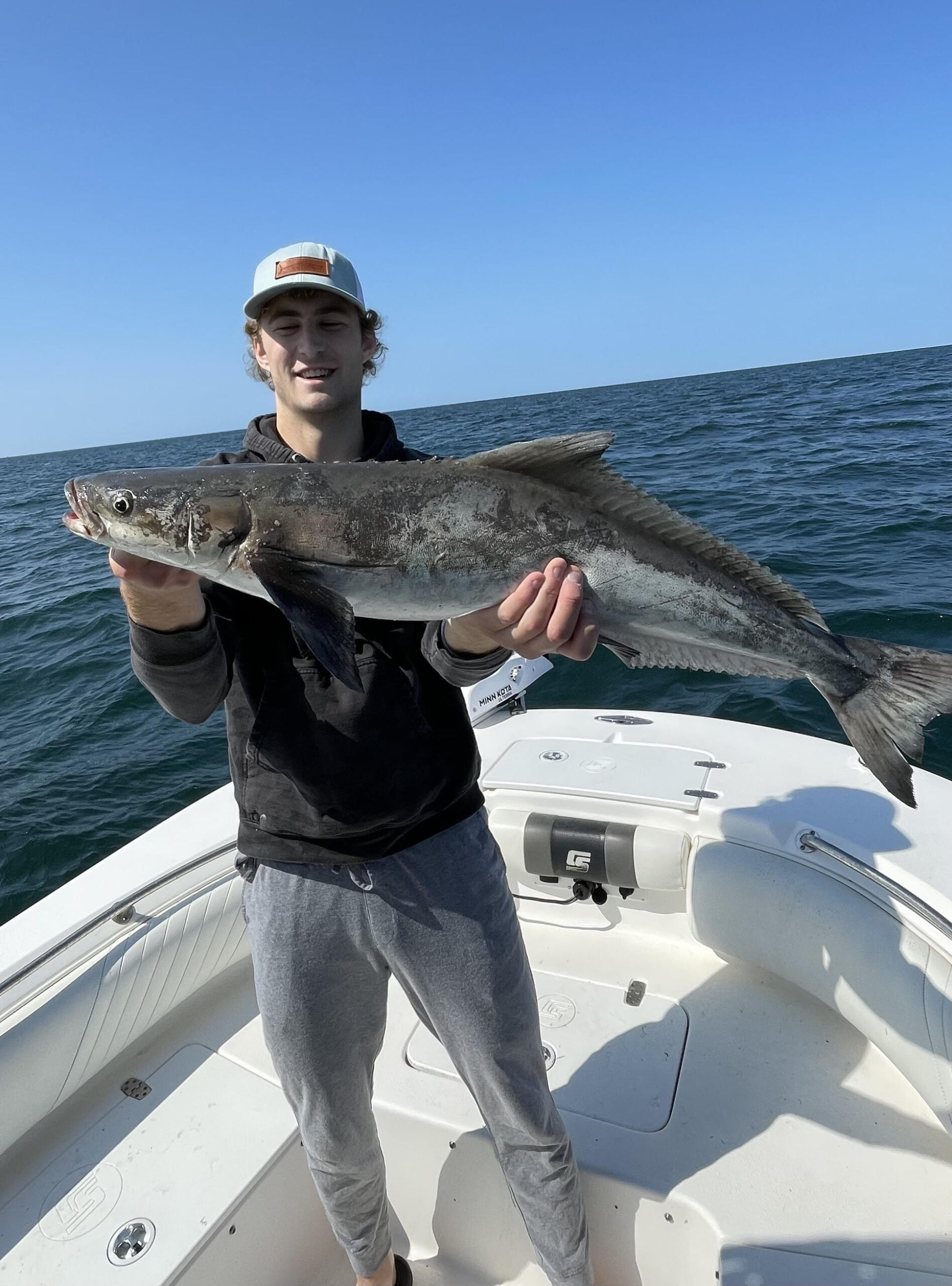
Prior to last Summer season, never once in my life had I hooked or caught a red snapper. However, one fishing trip to a good spot was old news and from then on, I’ve been hooked on catching more of them.
Like most of the other articles, this one starts with a discussion of the various seasons where harvesting or keeping red snapper is legal. This is awesome because it sets the precedent for the rest of the article. It is essentially saying, yes, we can pursue these awesome fish, but we need to do so carefully to make sure fish populations are staying healthy. This will ensure better fishing for years to come so that people can enjoy the beautiful waters of this Earth long after we are gone.
The article goes through state by state discussing the various times when you are allowed to keep a red snapper. So, if you are traveling or planning a trip and do expect to harvest red snapper, be sure to look at this article to see whether or not the season is open wherever you are going.
The article continues with a few brief tips on how to better target red snappers looking at things like depth, bottom, and even structure. All of these are extremely important factors that play into your bite.
The article then closes with a little conclusion. Now while this article was primarily meant to discuss the seasons in which red snapper can be harvested or not, I do want to give the readers some more tips regarding these fish.
Now don’t get me wrong, all of these seasonal details are extremely important and should not be ignored, but I would like to give further tips on how to actually target these species.
For the most part, red snapper are found in deeper waters like the depths mentioned in the article. These snappers love to pile up and school making them fairly easy to identify on your depth finder. To do this, cruise over areas of known bottom structure or bait and then sometimes you will be able to see a cloud of marks just over the bottom. If you are in the right area at the right time of year, this very well could be a red snapper.
To find out, I would recommend using Carolina rigs with big egg sinkers and a 50–60-pound monofilament leader to prevent breakoffs. For bait, I would use live pogies or other minnows if you have them or you can also use cut bait or whole dead bait like cigar minnows. These snappers have bigger mouths and appetites than you think so don’t be afraid to drop a bigger bait down.
Red snappers will also fight extremely hard once hooked and they will try to take you to the bottom to break you off. Be wary of this and fish tighter drag to try to get them up as quickly as possible.
One last thing I would mention is with regards to red snappers’ air bladder. If the snapper is pulled up from deep enough, their air bladder can expand, and it makes them float. This means they can’t swim back down and will likely die. To avoid this, buy a puncturing device called a venting tool and puncture the fish in the correct area (you can easily find this on YouTube) to safely release the fish.
I hope these comments were helpful and as always, good luck and tight lines!