Any question about the article?
Please use your work e-mail, so we can connect with you
Freshwater fishing is about more than throwing a lure into the water and hoping something bites. Success comes from understanding the conditions, choosing the right equipment, recognizing fish-holding structure, and presenting a bait where bass are most likely to feed.
Over the years, I’ve learned that you don’t need the most expensive fishing equipment, a fancy bass boat, or hundreds of dollars in tackle to catch fish. You need confidence in your equipment, an understanding of fish behavior, and the willingness to adjust your presentation.
Whether I’m competing in a bass tournament, fishing from my boat, or pulling over beside a promising roadside pond, I approach freshwater fishing with the same philosophy: keep things simple, fish with confidence, and let the conditions guide your decisions.
In this freshwater fishing guide, I’ll share my preferred fishing rods and reels, the freshwater fishing lures and rigs I use, and how I approach different types of cover, including reeds, lily pads, hydrilla, submerged grass, and shoreline structure. I’ll also explain how to find freshwater fishing near you, choose the right equipment, and prepare for your next fishing adventure.
One of the most important pieces of equipment in my setup is my fishing rod. When I’m fishing a soft plastic worm with a quarter-ounce weight, my preference is a medium-heavy casting rod.
A medium-heavy rod gives me the backbone I need to set the hook and control a bass around vegetation while still allowing me to fish a worm effectively.
Read also: How to Set Up a Fishing Rod for Beginners
I’m a big believer in rod sensitivity. When you’re slowly working a worm along the bottom, sometimes the only indication of a bite is a slight tick or a change in pressure. Other times, the line simply starts moving in a direction you weren’t expecting.
That’s why I prefer Trika fishing rods. In my opinion, Trika makes some of the most sensitive fishing rods on the market. Sensitivity is especially important when dragging a worm across the bottom or trying to determine whether your bait has contacted grass, wood, rock, or a fish.
When researching the top fishing rods for freshwater, think about the techniques you plan to use.
A medium-heavy casting rod is a versatile option for many bass fishing situations, especially when working Texas-rigged worms, creature baits, and other soft plastics around vegetation.
Lighter spinning rods are useful for finesse fishing, while heavier rods may be appropriate when fishing particularly dense cover. The right rod depends on your lure weight, line, target species, and the cover you’re fishing.
Important detail: A freshwater fishing pole can mean different things to different anglers. Some use the term for a simple pole-and-line setup, while others use it interchangeably with fishing rod.
Here’s something that might surprise some anglers: I don’t believe you need an expensive reel to catch bass.
I’ve used reels at different price points, and my experience has been that a reasonably priced reel can perform very well for many of the techniques I use. For me, the rod is where I prefer to invest more of my money.
I own 2 Daiwa Tatula reels, and I really like the way they feel. They’re comfortable, smooth, and enjoyable to fish with. I also own five KastKing reels (KastKing), which cost about half as much. Both brands get the fish to the boat. For me, it comes down to personal preference rather than price.
I generally prefer baitcasting reels for worm fishing because they’re comfortable, efficient, and allow me to make repeated, accurate casts once I’m familiar with their braking systems.
For lighter presentations, I switch to spinning equipment. A spinning reel makes it easier to cast small, lightweight lures without having to manage a baitcaster’s spool during every cast. The Piscifun Carbon X II lightweight spinning reel (Piscifun) is another affordable option worth exploring.
When comparing freshwater fishing reels, consider smooth operation, a reliable drag, comfortable handling, and how well the reel balances with your rod.
The best fishing rod and reel combo for freshwater is ultimately the one that suits the techniques you actually fish.
For my everyday worm fishing, that means a medium-heavy casting rod paired with a baitcaster I can comfortably use throughout the day. Someone fishing for bluegill or using lightweight finesse lures (even as one of the lures for bluegill) may be better served by a lighter spinning combination.
You don’t need to spend the most money to get started. Choose dependable equipment that fits your budget, learn how to use it properly, and upgrade when you identify a genuine need.
For most of my worm fishing, I prefer a braided main line connected to a fluorocarbon leader.
Braid provides excellent sensitivity and very little stretch. When I’m fishing a worm along the bottom, that direct connection helps me feel what’s happening with my bait.
Fluorocarbon offers a less visible connection near the lure and provides abrasion resistance around many types of structure.
My typical baitcasting setup uses 30-pound braid connected to a 15-pound fluorocarbon leader. I use an Alberto knot to connect the two lines.
It’s a connection I’ve become comfortable tying, and it works well for my fishing style when tied correctly. I always recommend checking your leader regularly, especially after fishing around rocks, wood, reeds, or other abrasive cover.
A damaged fluorocarbon leader can cost you the fish of a lifetime. Check your line and knots for damage, and re-tie whenever you notice fraying or other wear. When fishing extremely heavy vegetation, I may adjust my line setup to suit the cover and the amount of pressure I’ll need to apply to get a fish out.
When I’m fishing an area with reeds or other thick vegetation, my approach changes.
Instead of using my standard quarter-ounce weight, I’ll often switch to a heavier sinker, such as a three-quarter-ounce weight, and 50-pound braided line. I pair it with a 4/0 flipping hook and a creature bait.
The heavier weight helps the bait penetrate vegetation and reach the bottom.
This is where flipping and pitching become especially effective. I like to target both the outside edges of the reeds and openings within the vegetation. Bass often position themselves along these edges, waiting for an opportunity to ambush baitfish or other prey.
When I pitch my creature bait into an opening, I let it sink all the way to the bottom and sit for approximately five seconds before moving it.
That pause is intentional. Sometimes a bass will pick up the bait while it’s sitting motionless. Other times, the first slight movement after the pause triggers the strike.
After those five seconds, I’ll gently lift or move the bait and let it settle again. If nothing happens, I’ll retrieve it and pitch to another target.
Accurate bait placement is often more important than making a long cast when fishing heavy cover. I want that bait in the exact pocket or opening where a bass might be hiding.
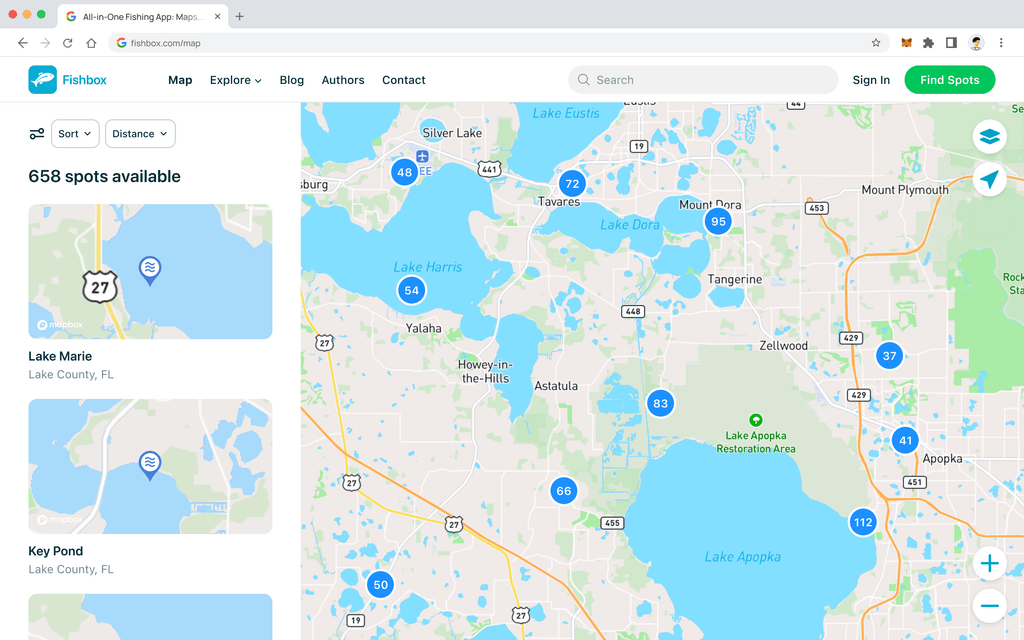
By using Fishbox maps, I can find a section of lily pads on a lake that I want to target. Identifying these areas before heading out helps me plan where to spend my time.
Lily pads require a different approach. When I see a large area of pads, I want a lure that stays close to the surface and moves over vegetation without constantly getting hung up.
Some of my favorite choices are a hollow-body topwater frog and a soft plastic Horny Toad. Weedless soft plastics that can move across vegetation are also useful options.
I’ll cast across the pads and work the lure toward openings. When the bait reaches a small hole between the pads, I’ll often let it fall or settle into that opening, giving a bass positioned underneath the vegetation an opportunity to attack.
For fishing hollow-body frogs around heavy lily pads and vegetation, I prefer a heavy-power, fast-action rod paired with a baitcasting reel with a 7:1 to 8:1 gear ratio and 50-pound braided line. This setup gives me the power to turn a bass away from heavy cover before it gets buried in the vegetation.
One of the most exciting parts of this technique is watching a bass explode through the vegetation to attack a topwater lure. When fishing a frog, I try not to react too quickly to the splash. I wait until I feel the fish load up on the rod before setting the hook.
When I want to catch bass in freshwater, one of my go-to lures is a Zoom Speed Worm, especially in June bug red. It’s a versatile soft plastic that I can fish around submerged grass, hydrilla, isolated stickups, and other structures where largemouth bass like to hide.
If I had to choose one bait to keep tied on for covering water and finding active bass, a Speed Worm would be near the top of my list.
For anglers interested in other panfish, our guide to fishing for crappie covers additional tips and techniques.
I typically use a medium-heavy baitcasting rod with a quarter-ounce bullet weight and an offset round-bend hook. I pair it with braided line and a fluorocarbon leader. This setup gives me the casting control and sensitivity I want while fishing around vegetation and structure.
I adjust the weight based on the conditions. A quarter-ounce weight is a good starting point, but I may go heavier when I need to get through thicker grass or keep the bait near the bottom.
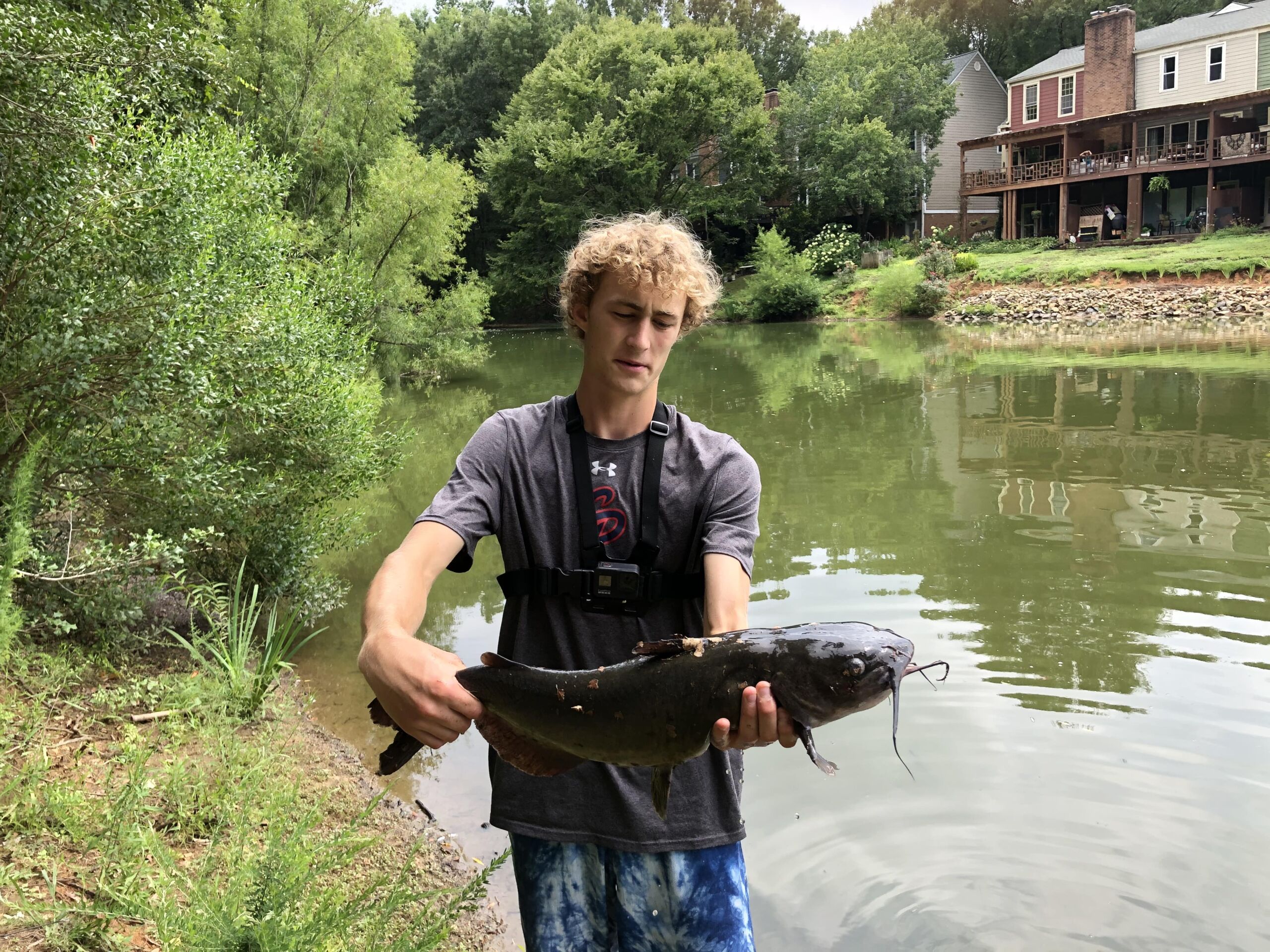
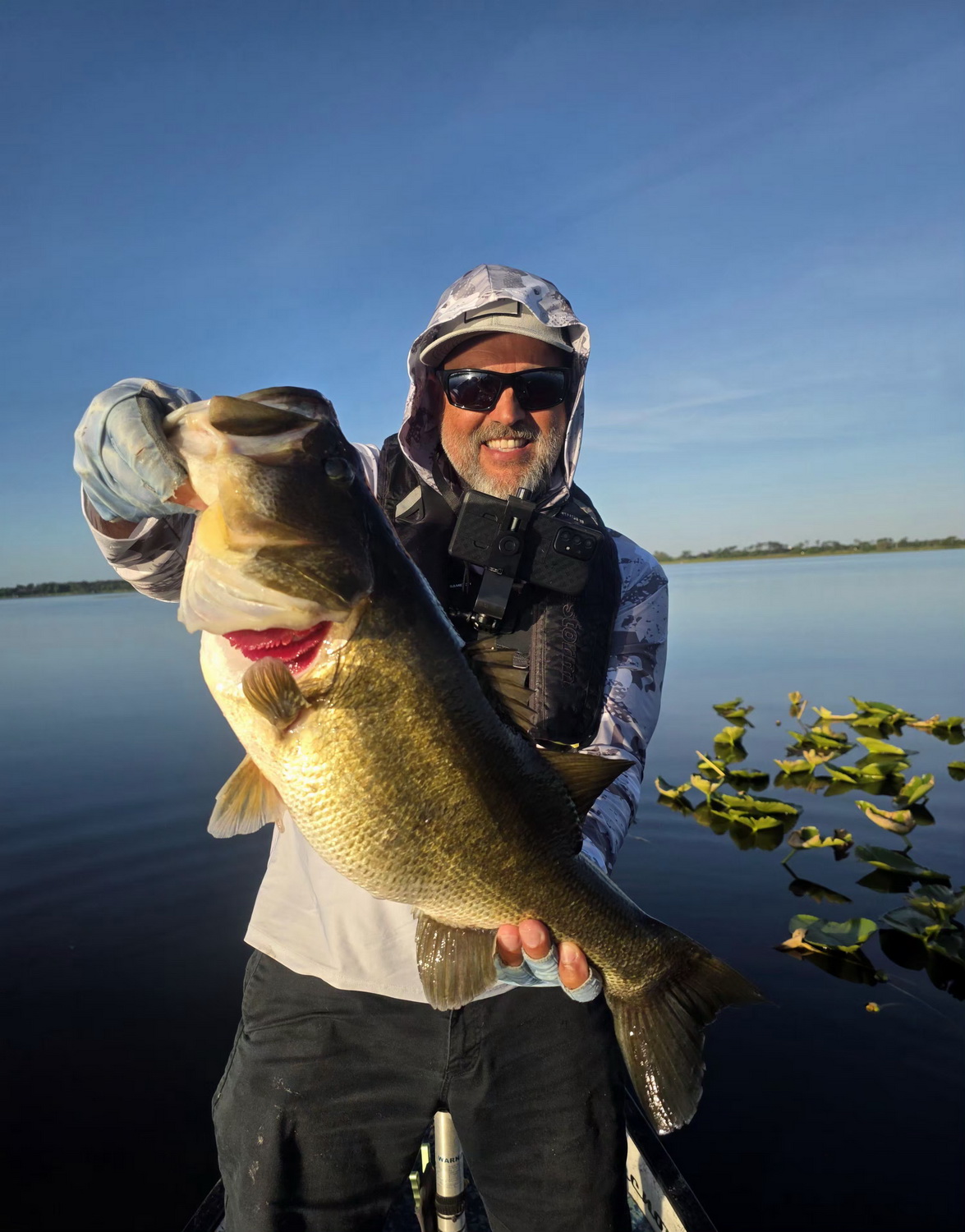
One of my largemouth bass catches. Finding the right presentation and learning where bass hold can make all the difference.
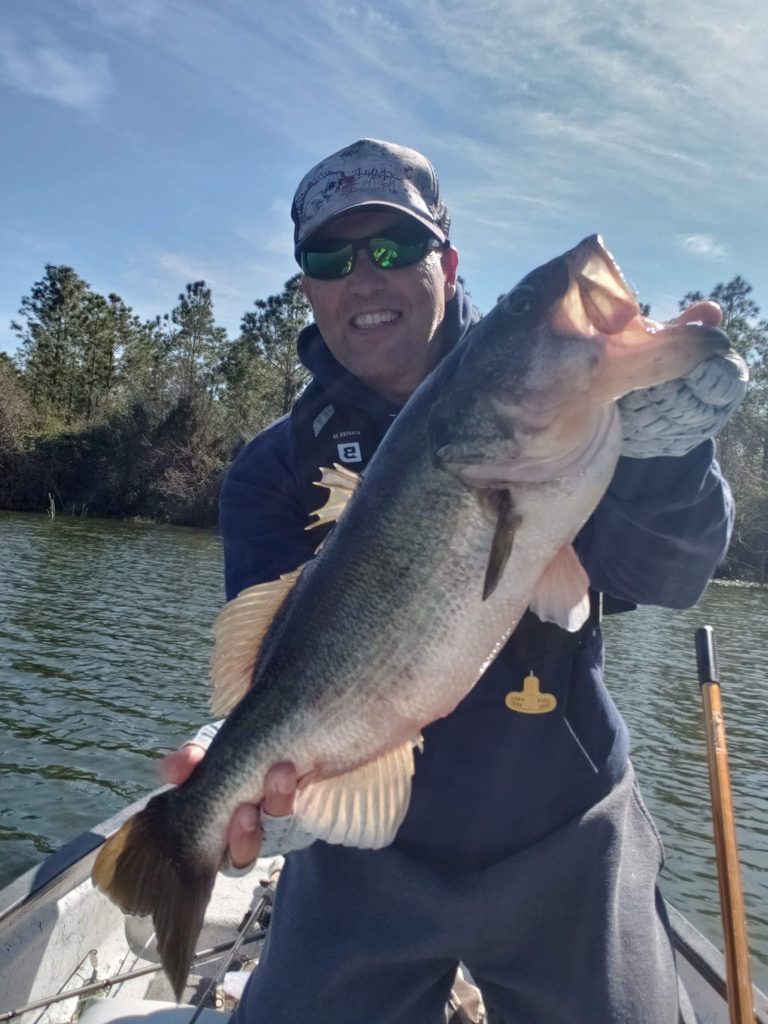
My approach is simple: make a cast, let the worm reach the depth I want, and retrieve it slowly enough to maintain contact with the bottom when conditions allow. I want the worm moving naturally while its tail creates action.
I pay particular attention to the edges of submerged grass, holes in hydrilla, isolated vegetation, and stickups.
I don’t rush every retrieve. Bass may follow a bait or sit tight in cover, so changing the speed slightly can make a difference. If I feel a tap, unusual resistance, or the line starts moving in a direction I wasn’t expecting, I pay close attention because a bass may have picked up the worm. I set the hook firmly and use steady pressure to guide the fish away from heavy cover.
The best freshwater fishing lures are not always the most complicated. Learning where and how to present one reliable bait can help you become a more consistent angler. For me, the Speed Worm is a confidence bait because I can fish it in a variety of conditions without constantly changing techniques.
You don’t need a boat to catch quality bass. Some of the best fishing opportunities can happen when I notice an interesting pond, canal, or shoreline while driving.
That’s why I keep a fishing backpack ready to go in my vehicle, along with a two-piece rod and a baitcasting reel.
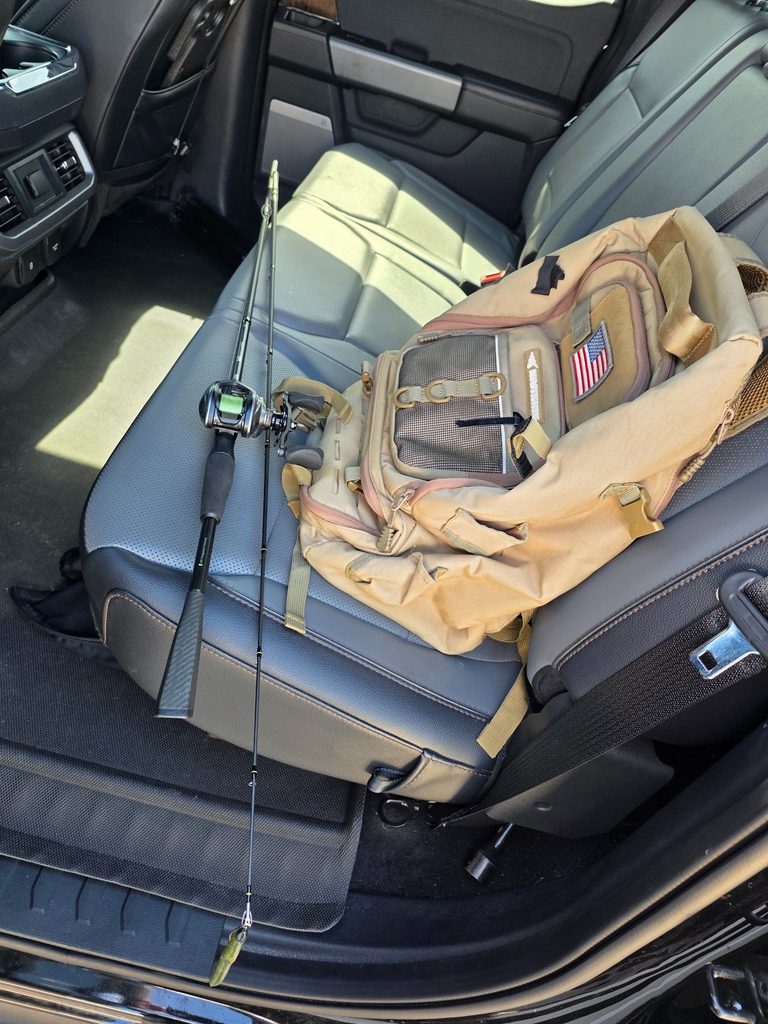
If I see a promising location, I want to be able to pull over safely, get my equipment out, and start fishing without spending twenty minutes assembling my tackle.
I make sure there’s a legal place to park and that fishing access is permitted. Once I arrive, I study the shoreline for reeds, lily pads, submerged grass, fallen trees, and other features that may attract bass.
One of my bank-fishing outings. A simple setup, a good spot along the shoreline, and a rewarding catch.
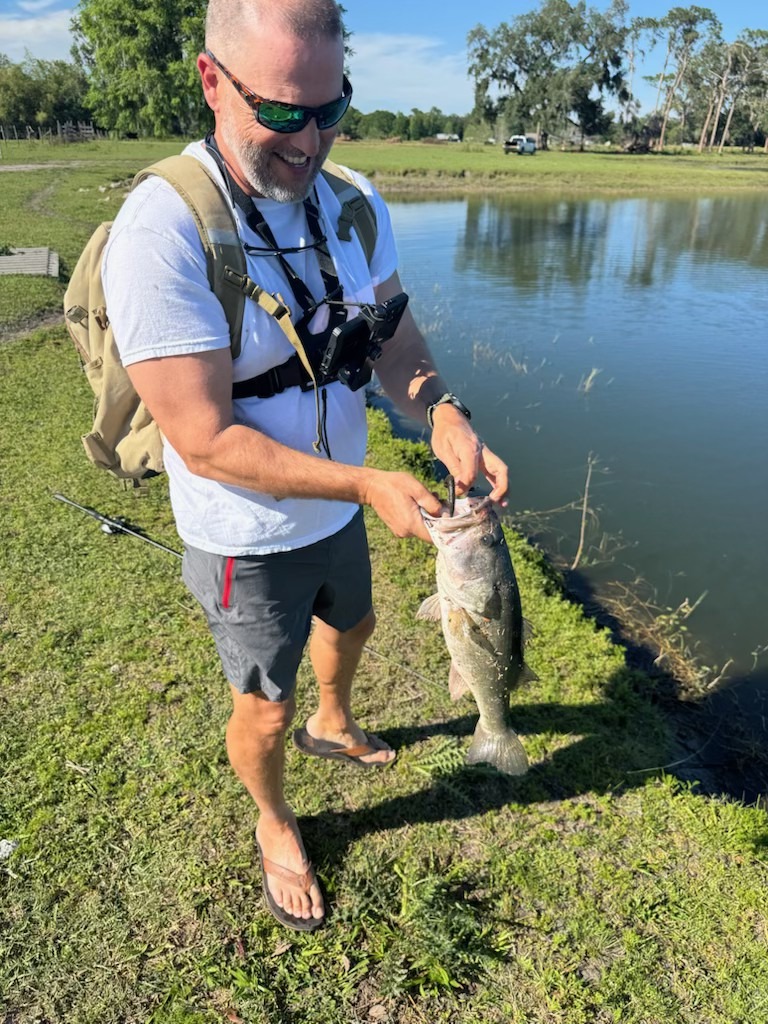
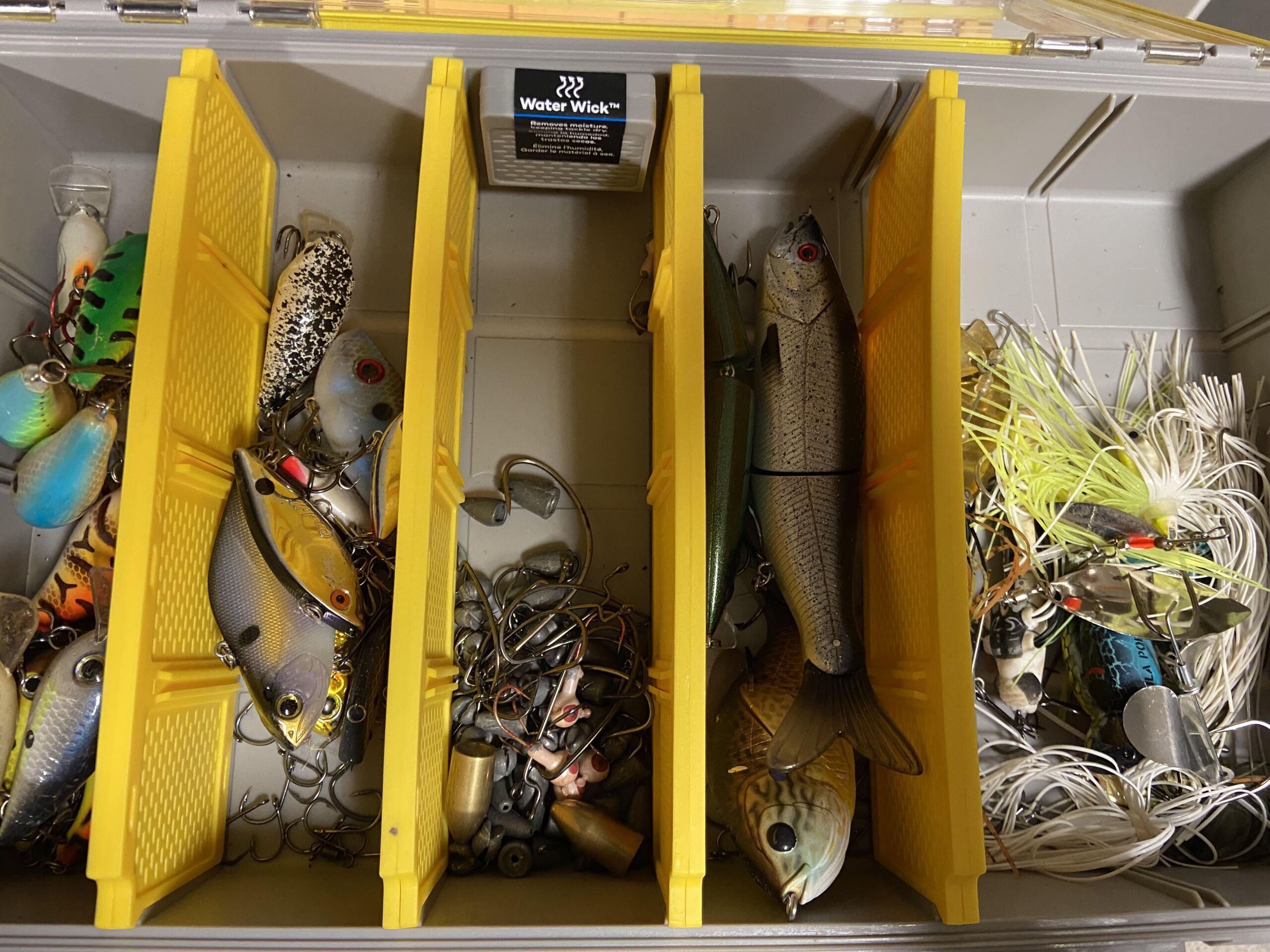
My bank fishing backpack includes Speed Worms, creature baits, topwater frogs, hooks, bullet weights, spare fluorocarbon leader, pliers, and line cutters. I carry enough equipment to adjust my presentation without hauling around an entire tackle shop.
A two-piece rod is especially convenient because it takes up less room in my vehicle. Keeping everything ready means I can take advantage of unexpected opportunities to fish.
This is the freshwater fishing tackle I rely on for most quick fishing trips.
Before making a long cast, I also check the water close to shore, and good spots. Bass can hold surprisingly close to the bank, and walking straight to the water’s edge can disturb fish that are only a few feet away. When possible, I’ll make a few casts parallel to the shoreline before moving closer.
If you’re ready to explore beyond bass and target other freshwater predators, northern pike are a great species to learn about. Before heading out, check out our guides to the best live bait for pike and the differences between northern pike and muskie to help you understand what you’re targeting and how to approach it.
Fishbox is one of the tools I use to prepare for a fishing trip. The app provides fishing maps that help me explore potential locations and understand the water I’m planning to fish.
Weather forecasts are also useful for checking wind direction, temperature, and changing conditions. I pay attention to barometric pressure, although I don’t believe one particular reading guarantees that bass will bite.
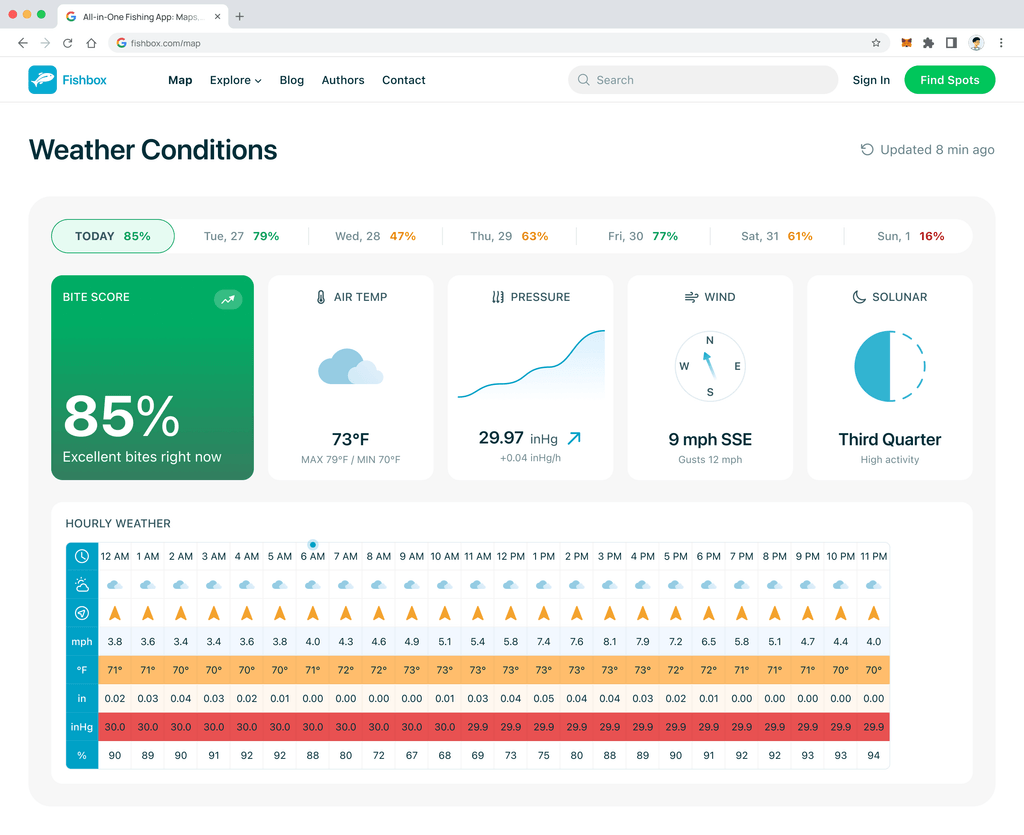
Wind direction is one of the first things I consider when choosing where to fish.
If the wind is blowing steadily against one bank, that’s often the bank I want to target. Wind creates surface movement and can concentrate floating debris and food sources along a shoreline. It can also influence where baitfish gather. When baitfish move into an area, bass may follow.
I’ll look for grass edges, reeds, submerged structure, and other cover along the windward shoreline. Sometimes the best location is a pocket or point where wind pushes water against the bank.
However, wind isn’t a guarantee that bass will be there. Water temperature, seasonal patterns, cover, and forage all influence fish behavior.
If the forecast calls for strong winds, I may choose a smaller lake or a shoreline with more protection. When fishing from a small boat or kayak, safety and boat control take priority. I’ll move to a calmer area if necessary.
Fishbox gives me information to consider before I arrive, but I still rely on my own observations once I’m on the water.
Although I rely heavily on the Speed Worm, I believe anglers should understand several basic freshwater fishing rigs.
When fishing with live shiners and circle hooks, I prefer to let the hook do the work rather than making an aggressive hook set. When the bobber goes under, reel in the slack and apply steady pressure to help the circle hook catch in the corner of the fish’s mouth.
There isn’t one perfect rig for every situation. Learn what each setup does well, then choose the one that matches the fish, cover, and conditions.
If you’re interested in other freshwater species, you can also learn how to catch carp using different bait choices and fishing techniques.
You don’t need a huge collection of freshwater fishing accessories to get started, but a few essentials can make every trip easier.
I recommend carrying:
Don’t overlook personal freshwater fishing essentials, such as sunscreen, drinking water, weather-appropriate clothing, a first-aid kit, and a fully charged phone.
When fishing from a boat or kayak, carry and wear an appropriate personal flotation device according to applicable requirements. Tournament anglers should also check their rules for approved measuring boards and any required catch-verification tools.
Freshwater fishing from a boat gives me the ability to cover more water and reach areas that may be inaccessible from shore.I can explore a wider range of depths and position myself to make more accurate casts to offshore targets.
Bank fishing, on the contrary, provides a simple way to learn the basics without the additional costs of purchasing, storing, transporting, and maintaining a boat. It’s also a great way to fish with family and introduce young people to fishing.
When I fish from the bank, I concentrate on visible cover and shoreline structure.
You can check out one of my latest videos on bank fishing here to see how I approach it and what my setup looks like.
If there’s one thing I want anglers to take away from this guide, it’s that successful freshwater fishing doesn’t have to be complicated.
You don’t need twenty different rods or the most expensive reels on the market. Start with dependable equipment, a few proven lures, and a basic understanding of where fish are likely to hold.
Learn to fish a soft plastic worm correctly. Understand how to adjust your presentation around reeds, lily pads, hydrilla, and other cover. Pay attention to wind direction and changing weather conditions, and don’t overlook opportunities to fish from the bank.
I recommend keeping a simple, versatile setup ready to go. My medium-heavy casting rod, braid-to-fluorocarbon connection, and confidence in a June bug red Speed Worm give me a starting point for many bass fishing situations. When the cover or conditions change, I’m ready to switch to a heavier creature bait or a topwater presentation.
For lighter techniques, I’ll reach for spinning tackle and a drop-shot or Ned rig.
Most importantly, spend time on the water. Every fishing trip teaches you something, even when the fish aren’t cooperating.
For me, that means trusting my equipment, keeping a Speed Worm ready, and never passing up an opportunity to make a few casts when I discover an interesting piece of freshwater.
You never know when that next cast might produce the bass of a lifetime.
Dale Templeton is a Central Florida bass angler and local tournament competitor who specializes in largemouth bass. He shares simple, proven techniques that help anglers of every level catch more fish.