

Rock Bass
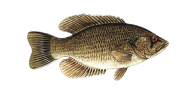
The rock bass, Ambloplites rupestris, is a robust freshwater fish commonly found in North America, particularly in clear, rocky streams and lakes. Known for its stout body and reddish eyes, it is a popular target for anglers due to its aggressive bite and the challenge it offers. This species thrives in shallow, rocky habitats where it feeds on small fish, insects, and crustaceans.
 Length~20 (max 43)
 Weight~1 (max 2)
 WaterFresh
 Water Temp15-26° F
 Depth4 ft
- Other namesRock perch, Goggle-eye, Red eye, Black perch
- Length~20 (max 43)
- Weight~1 (max 2)
- WaterFresh
- Water Temp15-26° F
- Depth4 ft
Popular lures for Rock Bass

Regulation for Rock Bass
Living Conditions
🐟 Habitat preferences
- Inhabits clear, rocky streams, lakes, and river pools, especially where vegetation is abundant
- Prefers shallow waters with a mix of rock and vegetation, providing ample cover
- Feeds primarily on small fish, aquatic insects, and crustaceans, making it a versatile predator
- Often found in slower-moving waters, avoiding swift currents but still favoring areas with good oxygenation
♻️ Life cycle and mating behavior
- Male rock bass create and guard nests in shallow waters, typically in gravel or sandy bottoms
- During the breeding season, males aggressively defend their nests against intruders, often fanning the eggs to keep them oxygenated
- Multiple females may spawn in a single nest, with the male caring for the eggs until they hatch
- Activity levels increase during spawning, making them more likely to bite during this period