

Yellow Perch
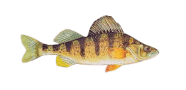
The yellow perch, Perca flavescens, is a popular freshwater fish native to North America, especially abundant in lakes and slow-moving rivers. It is easily recognized by its golden-yellow body with distinct vertical dark stripes. Known for its schooling behavior, yellow perch are a favorite among anglers for their taste and willingness to bite. They thrive in cooler waters and are often found near vegetation, making them accessible targets throughout the year.
 Length~10 (max 25)
 Weight~1 (max 2)
 WaterFresh
 Water Temp17-25° F
 Depth13 ft
- Other namesPerch, Striped perch , Preacher
- Length~10 (max 25)
- Weight~1 (max 2)
- WaterFresh
- Water Temp17-25° F
- Depth13 ft
Popular lures for Yellow Perch

Regulation for Yellow Perch
Living Conditions
🐟 Habitat preferences
- Yellow perch prefer cool, shallow waters in lakes, ponds, and slow-moving rivers
- They are often found near vegetation, where they seek cover and hunt for food
- This species is a schooling fish, frequently forming large groups in open water or near submerged structures
- Their diet includes insects, crustaceans, and smaller fish, making them versatile predators
♻️ Life cycle and mating behavior
- Spawning occurs in early spring, with females laying eggs in long strands over vegetation or submerged structures
- The eggs hatch within a few weeks, and the young remain in shallow areas with dense vegetation for protection
- Juvenile perch grow rapidly, forming schools for better protection and feeding efficiency
- As they mature, yellow perch continue to school and are known for their predictable seasonal movements, which can aid anglers in targeting them effectively