

White Crappie
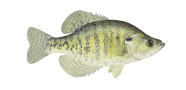
The white crappie, Pomoxis annularis, is a freshwater game fish commonly found in North America's lakes, rivers, and reservoirs. Known for its preference for turbid waters, it is a popular species among anglers due to its abundance and willingness to bite. This species thrives in various habitats, from small ponds to large river systems, and plays a significant role in recreational fishing.
 Length~23 (max 39)
 Weight~1 (max 2)
 WaterFresh
 Water Temp13-17° F
 Depth1-4 ft
- Other namesGoldring, Silver perch, White perch, Sac-a-lait
- Length~23 (max 39)
- Weight~1 (max 2)
- WaterFresh
- Water Temp13-17° F
- Depth1-4 ft
Popular lures for White Crappie

Regulation for White Crappie
Living Conditions
🐟 Habitat preferences
- White crappie prefers slow-moving waters with muddy or sandy bottoms
- It is commonly found in turbid waters, often in lakes, ponds, and the backwaters of rivers
- Its diet primarily consists of smaller fish, such as shad, which are abundant in these environments
- Juveniles tend to feed on small invertebrates and microcrustaceans, making them versatile in various aquatic settings
♻️ Life cycle and mating behavior
- The spawning season occurs in spring when water temperatures rise
- Males create nests in shallow waters, often near aquatic vegetation, where females lay eggs
- Post-spawning, adults may move to deeper waters while the fry stay near vegetation for protection
- The species displays seasonal movement patterns, often influenced by water temperature and food availability