

Spotted Sunfish
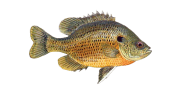
The spotted sunfish, Lepomis punctatus, is a small freshwater fish known for its vibrant coloration and distinctive spots along its body. Native to the southeastern United States, it thrives in warm, slow-moving waters. Anglers often target this species for its willingness to bite and its popularity as a panfish, making it a common catch in recreational fishing.
 Length~10 (max 20)
 Weight~0.08 (max 0.08)
 WaterFresh
 Water Temp23-26° F
- Other namesStumpknocker
- Length~10 (max 20)
- Weight~0.08 (max 0.08)
- WaterFresh
- Water Temp23-26° F
Popular lures for Spotted Sunfish

Regulation for Spotted Sunfish
Living Conditions
🐟 Habitat preferences
- Spotted sunfish prefer slow-moving waters such as ponds, lakes, and sluggish rivers, especially where there is plenty of vegetation and cover
- They are often found near submerged structures like fallen logs, roots, and aquatic plants, which provide both food and protection
- Their diet consists mainly of small invertebrates, insects, and plant matter, making them opportunistic feeders that are easy to attract with bait
- Anglers can find them in shallow, vegetated areas where they actively forage, particularly in the early morning and late afternoon
♻️ Life cycle and mating behavior
- The spawning season for spotted sunfish occurs in the warmer months, with males creating and guarding nests in shallow, sandy or muddy bottoms
- Males become territorial during the spawning period, aggressively protecting their nests from intruders
- After the eggs hatch, the young fish remain in the shallow areas, relying on vegetation for cover as they grow
- During spawning, the males' heightened activity and aggression can make them more susceptible to being caught by anglers