

Spotted Bass
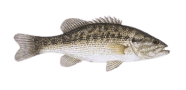
The spotted bass, Micropterus punctulatus, is a freshwater fish native to North America, particularly in rivers and reservoirs of the Mississippi River basin. It is easily recognized by its elongated body and distinctive rows of dark spots along the lower sides. Known for its aggressive behavior, the spotted bass is popular among sport anglers. It typically inhabits clearer, flowing waters and feeds on small fish, insects, and crustaceans.
 Length~38 (max 64)
 Weight~1 (max 5)
 WaterFresh
 Water Temp13-23° F
 Depth3-9 ft
- Other namesSpotty, Spots
- Length~38 (max 64)
- Weight~1 (max 5)
- WaterFresh
- Water Temp13-23° F
- Depth3-9 ft
Popular lures for Spotted Bass

Regulation for Spotted Bass
Living Conditions
🐟 Habitat preferences
- Spotted bass prefer clear, flowing waters like streams, rivers, and reservoirs, often near rocky or gravelly bottoms
- They are frequently found near structures like submerged logs, rocks, or vegetation, where they can ambush prey
- Their diet mainly consists of smaller fish, crayfish, and insects, which they hunt actively, especially during dawn and dusk
- Unlike largemouth bass, spotted bass are more tolerant of cooler, swifter waters and can be found in deeper parts of rivers
♻️ Life cycle and mating behavior
- Spotted bass spawn in the spring when water temperatures rise, preferring shallow, gravelly areas for nesting
- Males create and guard nests, where females deposit eggs before the males continue to protect the nests until the fry hatch
- Juvenile spotted bass tend to stay near cover in shallow waters before gradually moving to deeper areas as they mature
- Seasonal patterns influence their activity, with more aggressive feeding and movement during warmer months, followed by slower activity in colder seasons