

Speckled Longfin Eel
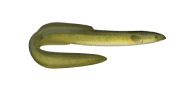
The speckled longfin eel, Anguilla reinhardtii, is a catadromous species native to Australia and nearby regions. It is recognized by its elongated body and mottled coloration. This eel inhabits a variety of freshwater environments, including rivers, lakes, and reservoirs, but migrates to the ocean to spawn. It is primarily nocturnal and feeds on a range of prey, including fish, crustaceans, and insects. This species is sought after by both commercial and recreational fisheries.
 Length~100 (max 300)
 Weight~- (max 22)
 WaterFresh
 Water Temp3-12° F
- Other namesAustralian long-finned eel , Marbled eel
- Length~100 (max 300)
- Weight~- (max 22)
- WaterFresh
- Water Temp3-12° F
Popular lures for Speckled Longfin Eel

Regulation for Speckled Longfin Eel
Living Conditions
🐟 Habitat preferences
- Speckled longfin eels are found in freshwater environments such as rivers, lakes, and reservoirs, preferring deeper waters away from the shore
- They are adaptable and can be found in both clear and murky waters, often in areas with abundant cover
- Their diet is varied, consisting of crustaceans, mollusks, and fish, including smaller eels
- Being nocturnal, they are most active at night when they hunt for food, making them less visible during the day
♻️ Life cycle and mating behavior
- This species is catadromous, meaning it spends most of its life in freshwater but migrates to the ocean to spawn
- Adult eels undertake long migrations to deep oceanic waters for spawning, after which they die
- The larvae are carried back to coastal waters by ocean currents before migrating upstream to freshwater habitats where they mature
- These migrations typically occur during specific seasons, driven by environmental cues such as water temperature and flow

