

Southern Stingray
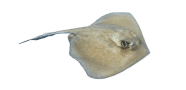
The Southern stingray, Hypanus americanus, is a bottom-dwelling marine species recognized by its broad, diamond-shaped body and sharp corners. Commonly found in the Western Atlantic, from the United States to Brazil, it prefers sandy and seagrass-covered areas. It feeds mainly on invertebrates, such as mollusks and worms, by digging into the substrate. This stingray is often spotted in bays and estuaries and is equipped with a venomous spine that can inflict painful injuries if threatened.
 Length~67 (max 150)
 Weight~73 (max 98)
 WaterSalt
 Water Temp28-32° F
 Depth4-61 ft
- Other names-
- Length~67 (max 150)
- Weight~73 (max 98)
- WaterSalt
- Water Temp28-32° F
- Depth4-61 ft
Popular lures for Southern Stingray

Regulation for Southern Stingray
Living Conditions
🐟 Habitat preferences
- Southern stingrays inhabit shallow coastal waters, particularly sandy bottoms and seagrass beds where they find cover and food
- They are frequently found in lagoons, bays, and estuaries, often burying themselves in the sand during the day
- Their diet primarily consists of benthic organisms like bivalves, worms, and crustaceans, which they uncover by creating depressions in the sand
- These stingrays are solitary by nature but may be observed in pairs or small groups, especially in areas abundant with food
♻️ Life cycle and mating behavior
- Southern stingrays are ovoviviparous, meaning they give birth to live young after the embryos develop inside eggs within the female
- Mating involves distinct pairing, with the male mounting the female dorsally during the breeding season
- After a gestation period, females give birth to a small number of fully formed young
- Seasonal migrations may occur, with stingrays moving to slightly deeper waters during cooler months, returning to shallower areas when temperatures rise