

Smallmouth Buffalo
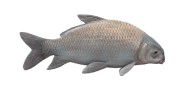
The smallmouth buffalo is a large, robust freshwater fish native to North America. It has a deep, laterally compressed body with a bronze or grayish-brown color. Found in rivers, lakes, and reservoirs, this species prefers slow-moving waters with muddy or silty bottoms. Though not as popular in sport fishing, it is valued for its role in commercial fishing and for its firm, white flesh.
 Length~50 (max 101)
 Weight~21 (max 30)
 WaterFresh
 Water Temp15-18° F
 Depth1-6 ft
- Other names-
- Length~50 (max 101)
- Weight~21 (max 30)
- WaterFresh
- Water Temp15-18° F
- Depth1-6 ft
Popular lures for Smallmouth Buffalo

Regulation for Smallmouth Buffalo
Living Conditions
🐟 Habitat preferences
- Smallmouth buffalo thrive in slow-moving rivers, lakes, and reservoirs with muddy or silty bottoms where they can forage for food
- They prefer areas with abundant organic matter, feeding primarily on detritus, plankton, and small invertebrates they sift from the bottom
- This species is often found in deeper waters during the day, moving to shallower areas at night to feed
- Smallmouth buffalo are adaptable and can tolerate turbid waters, making them common in habitats where other fish may struggle
♻️ Life cycle and mating behavior
- Spawning occurs in the spring, often triggered by rising water levels and increasing temperatures
- Smallmouth buffalo spawn in shallow waters with vegetation, where eggs are broadcast over the substrate and left to develop on their own
- Juveniles remain in shallow nursery areas rich in food and protection until they grow large enough to join adult populations in deeper waters
- Seasonal movements are common, with these fish moving to spawning grounds in the spring and returning to deeper, more stable environments as water temperatures change


