

Signal Crayfish
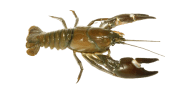
The signal crayfish is a freshwater crustacean native to North America, easily identified by its robust claws and a distinctive white or bluish patch at the joint of its claws. Introduced to Europe and other regions, it has become invasive, outcompeting native species. This hardy crayfish thrives in various aquatic environments and is a popular target for recreational fishing due to its tasty meat.
 Length~7 (max 20)
 Weight~0.06 (max 0.1)
 WaterFresh
 Water Temp20-25° F
- Other names-
- Length~7 (max 20)
- Weight~0.06 (max 0.1)
- WaterFresh
- Water Temp20-25° F
Popular lures for Signal Crayfish

Regulation for Signal Crayfish
Living Conditions
🐟 Habitat preferences
- Signal crayfish prefer clear, well-oxygenated waters, often found in streams, rivers, and lakes
- They seek out shelter in rocky crevices, burrows, and submerged vegetation to avoid predators
- These crayfish are omnivorous, feeding on aquatic plants, insects, small fish, and organic debris
- Active mainly at night, they forage close to their hiding spots, making them tricky to locate during the day
♻️ Life cycle and mating behavior
- The mating season occurs in the fall, with females carrying fertilized eggs under their tails through the winter
- Hatching occurs in late spring, with juveniles staying near their mothers before dispersing
- As signal crayfish mature, they molt multiple times, growing larger with each molt
- During the summer, they focus on feeding and molting, becoming less active as water temperatures drop in the colder months