

Shovelnose Sturgeon
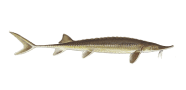
The shovelnose sturgeon is a freshwater fish native to the large rivers of North America, particularly within the Mississippi and Missouri River basins. It is characterized by its flattened snout and bony plates covering its body. This species is well adapted to turbid, fast-flowing waters with sandy or muddy bottoms. The shovelnose sturgeon primarily feeds on small invertebrates and is known for its resilience in altering environments, making it a species of interest for both conservation and angling.
 Length~60 (max 100)
 Weight~2 (max 5)
 WaterFresh
 Water Temp12-24° F
 Depth2-7 ft
- Other namesHackleback, Sand sturgeon, Switchtail
- Length~60 (max 100)
- Weight~2 (max 5)
- WaterFresh
- Water Temp12-24° F
- Depth2-7 ft
Popular lures for Shovelnose Sturgeon

Regulation for Shovelnose Sturgeon
Living Conditions
🐟 Habitat preferences
- Shovelnose sturgeon prefer large, turbid rivers with strong currents and sandy or muddy bottoms
- They are typically found in deep channels and backwaters, where they can forage for food
- This species feeds on a variety of invertebrates, including insects, crustaceans, and mollusks, which it locates by sifting through the substrate
- Shovelnose sturgeons are highly mobile, often moving upstream or downstream in response to changes in water levels and temperatures
♻️ Life cycle and mating behavior
- Spawning occurs in spring when water temperatures rise, with fish migrating to specific spawning grounds with gravelly or sandy substrates
- Females release eggs over these substrates, which are then fertilized by males; the eggs adhere to the substrate until they hatch
- After hatching, larvae drift downstream to quieter waters, where they grow into juveniles
- As they mature, shovelnose sturgeons return to faster currents, continuing the cycle as they reach reproductive age