

Redspotted Sunfish
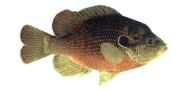
The redspotted sunfish, Lepomis miniatus, is a small but vibrant freshwater fish known for its distinct red spots and olive-green body. Native to the southeastern United States, it inhabits slow-moving waters such as ponds, lakes, and streams. While not as widely targeted as other sunfish, its striking appearance and feisty nature make it a delightful catch for anglers seeking variety. This species thrives in vegetated waters where it can find ample cover and food.
 Length~5 (max 10)
 Weight~0.5 (max 1)
 WaterFresh
- Other namesStumpknocker
- Length~5 (max 10)
- Weight~0.5 (max 1)
- WaterFresh
Popular lures for Redspotted Sunfish

Regulation for Redspotted Sunfish
Living Conditions
🐟 Habitat preferences
- Redspotted sunfish prefer calm, vegetated waters such as ponds, lakes, and slow-moving streams with abundant aquatic plants
- They are commonly found near the edges of water bodies, hiding among dense vegetation or submerged structures like logs and branches
- Their diet primarily consists of small insects, crustaceans, and other invertebrates, which they hunt among plants and near the bottom
- These fish are often associated with soft, muddy, or sandy bottoms, where they can easily find food and shelter
♻️ Life cycle and mating behavior
- Redspotted sunfish spawn in the spring and early summer, with males constructing nests in shallow, vegetated areas of water bodies
- The males aggressively guard the nests, attracting females to lay eggs, which are then fertilized and protected until they hatch
- After hatching, the fry stay close to the nest, utilizing the cover of vegetation for protection as they begin feeding on small plankton
- As they grow, juveniles gradually move into deeper waters, where they continue to feed on a variety of invertebrates, maintaining their preference for sheltered, vegetated areas