

Redeye Bass
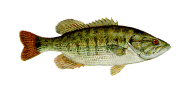
The redeye bass, Micropterus coosae, is a freshwater fish native to the river systems of the southeastern United States. Known for its distinctive red eyes and dark olive-green body, it inhabits cool, clear streams and rivers. Anglers prize the redeye bass for its aggressive behavior and spirited fight, making it a popular target in its native range. This species is often found in rocky habitats and is admired for its beauty and challenge.
 Length~19 (max 47)
 Weight~1 (max 2)
 WaterFresh
 Water Temp16-20° F
- Other namesCoosa bass
- Length~19 (max 47)
- Weight~1 (max 2)
- WaterFresh
- Water Temp16-20° F
Popular lures for Redeye Bass

Regulation for Redeye Bass
Living Conditions
🐟 Habitat preferences
- Redeye bass prefer cool, clear streams and rivers with moderate to fast currents, often in upland regions
- They are typically found near rocky outcrops, boulders, and submerged logs, which provide cover and feeding grounds
- Their diet consists mainly of insects, crayfish, and small fish, making them opportunistic predators within their habitat
- These fish are commonly located in areas with gravel or rocky bottoms, where they can find both shelter and prey
♻️ Life cycle and mating behavior
- Redeye bass spawn in late spring to early summer, with males preparing nests in shallow, gravelly areas of streams or rivers
- The males guard the nests, where females deposit eggs that are then fertilized and protected by the males until hatching
- After hatching, the fry remain in shallow areas close to the nest, gradually moving to deeper waters as they grow
- Juveniles and adults often display solitary behavior, maintaining territories and feeding aggressively, which makes them a challenging catch for anglers


