

Redear Sunfish
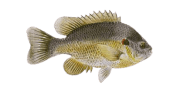
The redear sunfish, Lepomis microlophus, is a popular freshwater fish known for its distinct red or orange ear flap and its preference for snails as a primary food source. Commonly found in warm, slow-moving waters, it is a favorite among anglers due to its size and strong fight. Often called "shellcracker" for its snail-eating habits, the redear sunfish thrives in ponds, lakes, and reservoirs, where it plays a vital role in controlling snail populations.
 Length~20 (max 43)
 Weight~0.5 (max 1)
 WaterFresh
 Water Temp15-20° F
 Depth3 ft
- Other namesShellcracker, Georgia bream, Cherry gill, Chinquapin, Improved bream
- Length~20 (max 43)
- Weight~0.5 (max 1)
- WaterFresh
- Water Temp15-20° F
- Depth3 ft
Popular lures for Redear Sunfish

Regulation for Redear Sunfish
Living Conditions
🐟 Habitat preferences
- Redear sunfish prefer warm, calm waters with abundant vegetation, typically found in ponds, lakes, and slow-moving rivers
- They are often found near the bottom in areas with sandy or muddy substrates, where they forage for food
- Their diet is unique among sunfish, focusing heavily on snails and other mollusks, which they crush with specialized teeth
- These fish are usually located in deeper waters compared to other sunfish, especially during the warmer months
♻️ Life cycle and mating behavior
- Redear sunfish spawn in late spring to early summer when water temperatures are warm, building nests in shallow waters with sandy or muddy bottoms
- Males create and defend nests, attracting females to lay eggs, which they then fertilize and protect
- After hatching, the fry remain in the shallow nesting areas until they are large enough to venture into deeper waters
- Juveniles gradually move to deeper areas as they grow, adopting a diet similar to that of the adults, focusing on small invertebrates and mollusks