

Paddlefish
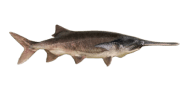
The Paddlefish (Polyodon spathula) is a unique freshwater fish native to North America, primarily found in the Mississippi River Basin. Recognizable by its long, paddle-shaped snout, this ancient species is a filter feeder, primarily consuming zooplankton. Paddlefish are highly valued for their roe, which is used to make caviar. Due to habitat loss and overfishing, they are considered a vulnerable species, with conservation efforts in place to protect their populations.
 Length~150 (max 220)
 Weight~27 (max 90)
 WaterFresh
 Water Temp15-24° F
- Other namesAmerican paddlefish , Mississippi paddlefish, Spoon-billed cat, Spoonbill
- Length~150 (max 220)
- Weight~27 (max 90)
- WaterFresh
- Water Temp15-24° F
Popular lures for Paddlefish

Regulation for Paddlefish
Living Conditions
🐟 Habitat preferences
- Paddlefish inhabit large, slow-moving rivers, lakes, and reservoirs with muddy bottoms
- They prefer waters with high plankton availability, which they filter feed on using their gill rakers
- These fish are often found near the surface or midwater, where plankton is abundant
- Paddlefish are migratory, often moving upstream in search of food or suitable spawning grounds
♻️ Life cycle and mating behavior
- Spawning occurs in spring when water temperatures rise, usually in fast-flowing waters over gravel or sand
- Females release eggs over clean substrate, where they adhere and develop
- After hatching, larvae drift downstream to calmer waters where they grow and mature
- Paddlefish are slow-growing and long-lived, with mature individuals returning to spawn after several years, making them susceptible to overfishing
