

Narrow Barred Spanish Mackerel
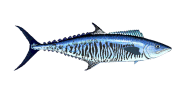
The narrow-barred Spanish mackerel, also known as Scomberomorus commerson, is a popular game fish found in tropical and subtropical waters of the Indo-West Pacific. It is known for its elongated body with distinctive vertical bars on its sides. This species is highly valued both commercially and recreationally, often sought after for its speed and strength, making it a challenging catch for anglers.
 Length~100 (max 200)
 Weight~38 (max 70)
 WaterSalt
 Water Temp22-29° F
 Depth10-70 ft
- Other names-
- Length~100 (max 200)
- Weight~38 (max 70)
- WaterSalt
- Water Temp22-29° F
- Depth10-70 ft
Popular lures for Narrow Barred Spanish Mackerel

Regulation for Narrow Barred Spanish Mackerel
Living Conditions
🐟 Habitat preferences
- This mackerel prefers coastal waters, often near the continental shelf's edge, where salinity is lower, and waters are turbid
- It is commonly found around coral reefs, drop-offs, and in shallow lagoons
- The fish primarily feeds on smaller fish like anchovies and squids, frequently hunting alone
- It can also be spotted swimming close to the shore along coastal slopes, especially in areas with abundant prey
♻️ Life cycle and mating behavior
- Narrow-barred Spanish mackerel spawn in specific areas, often forming large aggregations during the spawning season
- The timing of spawning varies with water temperature, and females can spawn multiple times within a season
- Eggs and larvae are pelagic, drifting in the open water until they mature
- The species is known to undertake long migrations along the coast, although some populations remain resident in specific areas