

Muskellunge
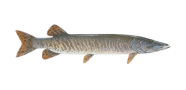
The muskellunge (Esox masquinongy), commonly known as "muskie," is a large freshwater predator native to North America. Known for its elongated body and sharp teeth, this fish is highly prized in sport fishing due to its elusive nature and powerful fight. Muskellunge inhabit clear lakes, slow-moving rivers, and backwaters, often hiding among vegetation or submerged logs. They are solitary hunters, feeding on fish, amphibians, and occasionally small mammals or birds.
 Length~70 (max 180)
 Weight~7 (max 30)
 WaterFresh
 Depth4-8 ft
- Other namesMuskie, Musky, Ski, Lunge
- Length~70 (max 180)
- Weight~7 (max 30)
- WaterFresh
- Depth4-8 ft
Popular lures for Muskellunge

Regulation for Muskellunge
Living Conditions
🐟 Habitat preferences
- Muskellunge prefer clear, vegetated lakes and quiet, slow-moving rivers with abundant cover
- They are often found in areas with submerged logs, rocks, and aquatic plants, which they use for ambush hunting
- Their diet mainly consists of fish, but they also prey on amphibians, waterfowl, and small mammals
- Muskellunge are generally solitary, occupying territories where they can lurk and ambush prey
♻️ Life cycle and mating behavior
- Spawning occurs in spring as water temperatures rise and ice melts
- Muskellunge lay their eggs in shallow, vegetated areas, with the female depositing eggs in sand or gravel
- Males do not guard the eggs, which are left to develop on their own
- Juveniles grow rapidly, starting with small prey, and gradually transition to larger food items as they mature