

Luderick
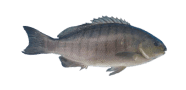
The Luderick, also known as Blackfish, is a coastal marine fish common in southeastern Australia and New Zealand. Recognizable by its dark bands and compressed body, this species is well-loved by recreational anglers for its challenging catch. Luderick thrive in shallow waters, particularly near rocky reefs, estuaries, and areas with abundant seaweed, which forms the bulk of their diet. Known for their cautious feeding behavior, they are often targeted using specialized techniques like weed baiting.
 Length~35 (max 71)
 Weight~2 (max 4)
 WaterSalt
 Depth20 ft
- Other namesParore, Black bream, Black snapper, Blackfish
- Length~35 (max 71)
- Weight~2 (max 4)
- WaterSalt
- Depth20 ft
Popular lures for Luderick

Regulation for Luderick
Living Conditions
🐟 Habitat preferences
- Luderick are commonly found in coastal waters, often close to rocky shores and reefs
- They prefer areas with abundant seaweed or seagrass, which they use for both cover and food
- Estuaries and river mouths also attract Luderick, particularly where salt and fresh water mix
- These fish are herbivorous, primarily feeding on various types of algae and seagrass, making them unique among coastal species
♻️ Life cycle and mating behavior
- Luderick spawn in the open ocean, usually during warmer months when conditions are optimal
- After spawning, eggs drift with the current until they hatch, with juveniles gradually moving towards coastal estuaries
- Young Luderick often congregate in sheltered, shallow waters where food is abundant
- As they mature, Luderick move towards deeper waters, though they remain near the shore, maintaining their herbivorous diet throughout their lives