

Longear Sunfish
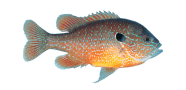
The Longear Sunfish, Lepomis megalotis, is a vibrant freshwater fish found in North America, particularly from the Great Lakes down to northeastern Mexico. Recognized by its bright colors and elongated ear flaps, this species is commonly found in shallow waters with dense vegetation. It feeds on small invertebrates and insects, making it a lively and attractive target for recreational anglers.
 Length~12 (max 24)
 Weight~0.5 (max 1)
 WaterFresh
 Water Temp22-27° F
 Depth30 ft
- Other names-
- Length~12 (max 24)
- Weight~0.5 (max 1)
- WaterFresh
- Water Temp22-27° F
- Depth30 ft
Popular lures for Longear Sunfish

Regulation for Longear Sunfish
Living Conditions
🐟 Habitat preferences
- Longear Sunfish thrive in shallow waters of small lakes, ponds, and slow-moving streams with abundant aquatic vegetation
- They prefer habitats with dense cover, such as submerged plants and woody debris, where they can find shelter and food
- Their diet consists mainly of small aquatic invertebrates, insects, and occasionally small fish
- Juveniles are usually found in quieter, shallow areas, while adults inhabit slightly deeper waters near vegetation
♻️ Life cycle and mating behavior
- Males establish and guard nests in shallow waters during the spawning season, often forming dense colonies
- Females lay eggs in the male's nest, where the male then fertilizes and protects them until they hatch
- After hatching, the young remain near the nest for some time before venturing into safer, vegetated areas
- Spawning typically occurs in warmer months, with fish displaying increased activity and aggression during this period