

Lake Whitefish
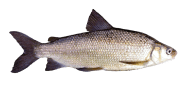
The lake whitefish is a freshwater species widely distributed across North America. Recognized by its deep, compressed body and silver sides, this fish is highly valued both commercially and recreationally. Lake whitefish typically inhabit cold, deep lakes and rivers, often preferring areas with sandy or gravelly bottoms. They are known for their delicate, mild-flavored flesh and are a key target for fisheries due to their popularity as food.
 Length~51 (max 79)
 Weight~2 (max 6)
 WaterFresh
 Water Temp7-17° F
 Depth15-60 ft
- Other names-
- Length~51 (max 79)
- Weight~2 (max 6)
- WaterFresh
- Water Temp7-17° F
- Depth15-60 ft
Popular lures for Lake Whitefish

Regulation for Lake Whitefish
Living Conditions
🐟 Habitat preferences
- Lake whitefish prefer cold, deep waters and are commonly found in large lakes and rivers
- They tend to stay in areas with sandy or gravelly substrates, which are ideal for their feeding and spawning activities
- Their diet mainly consists of aquatic insect larvae, mollusks, and small crustaceans, although they may also consume smaller fish and fish eggs
- Lake whitefish are relatively sedentary, especially in large bodies of water where they exhibit minimal movement except for seasonal migrations
♻️ Life cycle and mating behavior
- Lake whitefish migrate from deep to shallow waters in the spring and fall, returning to deeper areas during the summer and post-spawning period
- Spawning typically occurs in the fall or early winter, often at night, when groups of fish rise to the surface to release eggs and milt
- After spawning, they move back to deeper waters, and the eggs are left to develop on their own without parental care
- In colder, northern regions, lake whitefish may spawn less frequently, sometimes only every other year