

Barracuda
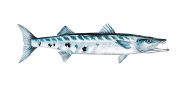
Barracudas are elongated, predatory fish known for their sharp teeth and swift hunting skills. These fish are primarily found in tropical and subtropical oceans, often near the surface or around coral reefs. Their sleek, torpedo-shaped bodies make them formidable hunters, capable of quick bursts of speed to catch prey. Barracudas are solitary hunters, although some species may form small groups. They are popular among anglers for their aggressive nature and strong fighting ability when hooked.
 Length~60 (max 165)
 Weight~2 (max 9)
 WaterSalt
 Water Temp23-28° F
 Depth100 ft
- Other names-
- Length~60 (max 165)
- Weight~2 (max 9)
- WaterSalt
- Water Temp23-28° F
- Depth100 ft
Popular lures for Barracuda

Regulation for Barracuda
Living Conditions
🐟 Habitat preferences
- Barracudas typically inhabit warm, tropical, and subtropical waters, often staying near coral reefs and seagrass beds
- They prefer clear waters and are usually found in shallow coastal regions, but some species venture into deeper waters
- These fish are opportunistic feeders, preying on a variety of smaller fish, including mullets, snappers, and anchovies
- Barracudas often lurk near the surface or mid-water, using their speed to ambush prey
♻️ Life cycle and mating behavior
- Barracudas spawn in open water, usually near the surface, where the eggs are left to drift with the current
- The larvae develop in shallow waters, where they find protection among mangroves and seagrass beds
- Juveniles often stay in groups for protection, but as they mature, they tend to become more solitary
- Spawning typically occurs during warmer months, with behavior influenced by water temperature and availability of food