

African Pompano
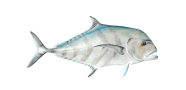
The African pompano (Alectis ciliaris) is a distinctive fish known for its silvery body and elongated fin rays. Found in tropical and subtropical oceans, it is a prized catch among anglers due to its strength and speed. This species inhabits reef-associated environments and is valued both for sport fishing and as a table fish.
 Length~130 (max 150)
 Weight~7 (max 23)
 WaterSalt
 Water Temp18-27° F
 Depth100 ft
- Other namesPennant-fish, Threadfin trevally
- Length~130 (max 150)
- Weight~7 (max 23)
- WaterSalt
- Water Temp18-27° F
- Depth100 ft
Popular lures for African Pompano

Regulation for African Pompano
Living Conditions
🐟 Habitat preferences
- African pompanos favor warm, subtropical waters, often near reefs and wrecks where they find ample food and shelter
- Juveniles tend to stay closer to shore in protected areas, while adults venture to deeper, offshore reefs
- Their diet consists mainly of crustaceans and small fish, making reefs and rocky areas prime feeding grounds
- They are typically found swimming in open waters near structures like reefs or shipwrecks that offer protection and abundant food sources
♻️ Life cycle and mating behavior
- Young African pompanos start life in shallow coastal waters, using these areas as nurseries before moving to deeper habitats as they grow
- Spawning occurs offshore, where adults release eggs into the open water. The larvae then drift with the currents until they develop into juveniles
- Post-spawning, adults return to their usual habitats, resuming their normal activities and feeding behaviors
- Throughout their life cycle, African pompanos exhibit seasonal migrations, often moving closer to shore during certain times of the year for feeding and spawning