
Any question about the article?
Please use your work e-mail, so we can connect with you
The oceans are filled with various exciting fish species, but what are the top 6 fastest fish in the ocean? While big fish are often the most sought-after, what about the fastest fish? If you’re chasing the world’s fastest fish, then you’ve come to the right place!
Which is the world’s fastest fish is a hotly debated topic, and let’s be honest, it’s not easy to try and organize a fish race between different species, so determining the fastest fish involves a lot of research. While fish use their speed for hunting prey and also escaping from larger prey, as anglers, the speed of a fish often determines how hard it fights, which makes targeting the fastest fish in the world so much fun.
In the following guide to the fastest fish in the ocean, we’ll cover:
If you’re looking to take a step back from chasing the fastest fish in the ocean, and you’re not afraid of a little cold weather, check out The Ultimate Guide to the Best Winter Fishing Destinations, where we cover everything there is to know about cold weather fishing.
The Fishbox is a premium Fishing Forecasting app that gives you access to advanced technology, including the best time to go offshore fishing in your local area and when you’re better off leaving the fast fish alone and sticking closer to shore for a more relaxed fishing experience.
With over 30,000 marine species currently known to science, from large fish to small, fast to slow, it’s no surprise that some fish have risen to the top of the speed list, but what makes a fast fish, and why is being fast important?
In the following article, we’ll examine some of the fastest fish in the world, but we’ll start with a small caveat. Measuring fish speed isn’t easy, and even scientists who spend their entire careers working on aquatic studies have struggled to come up with an exact way of doing it. So, we’re sure that there are going to be some questions and debates when it comes to the following fastest fish list.
Water is over 800 times denser than air, with a viscosity that’s much higher, so fish with aerodynamic body shapes, like Billfish or Tuna, are much better at cutting through compared to flatfish.
Along with their body shape, a fish’s skin and fins play a crucial role in how they move and cut through the water. A good example of this is the Tuna. Tuna can tuck their fins out of the way so their fins are entirely flush with their bodies, allowing them to increase their speed through the water.
Tuna and other fast swimmers like Marlin and Swordfish have skeletal muscles designed perfectly to produce thrust and speed. Their muscles, running down each side of their bodies, flex and tighten alternatively, which procures ripples to propel them through the water.
The ocean is a big place. Speed is a crucial survival skill. While some fish have evolved their own personal survival skills, like camouflage or poison spines, others focussed on speed. In the ocean, speed could be the difference between life and death.
For predatory fish species, speed allows them to close in and capture their prey, cutting in and out of schools of smaller, more nimble baitfish. For smaller prey fish, speed allows them to evade predators. In the life and death game playing out beneath the surface each day, being the fastest fish could mean the difference between life and death.
In this section, we’ll be looking at some of the world’s fastest fish. Again, we need to mention that while we heavily researched the topic of the world’s fastest fish, there are contradictory reports of speeds and top speeds versus average speeds, so we’ve done our best with the data and reports to compile an accurate list. This list also doesn’t include every one of the fastest fish in the world, just some of the most popular.
One of the hottest debates is the speed of the Black Marlin. In this article by BBC Science Focus, they reported the top speed of the Black Marlin as 129 km / 82 mph. While this is just one example and could be a burst of speed, for the sake of this article, we’ll be using this until further research has been identified.
After a Black Marlin peeled line from a fishing rod at 120 feet per second, their speed was recorded at an impressive 82 mph. However, prior to this, their speed was recorded much lower than at an average speed of between 30-40 mph.
Black Marlin is found throughout the Indian and Pacific Oceans, with one of the most popular locations to catch these monsters of the ocean off the coast alongside Australia’s Great Barrier Reef. Other great locations to catch a Black Marlin include Hawaii, Costa Rica, Panama, and Mexico.
The biggest Black Marlin ever caught was over 1,560 pounds and 15 feet in length, but the average size typically ranges between 125 and 300 pounds. Unlike a lot of other Marlins, Black Marlins don’t do a lot of leaping and tail-walking, preferring to use their energy running hard and fast, so be prepared for a long fight.
Arguably one of the fastest fish in the world based on their average speed, Sailfish will take the line from your rod and reel at a screaming pace that’s almost unmatched. One of the first signs of a Sailfish will be its beautiful fin breaking the surface of the water, signaling that you’re in for a huge fight.
Sailfish can be found in almost all tropical zones of the ocean, but if you’re looking to catch one, the best places to do it are Florida, Bermuda, Mexico, Curacao, Hawaii, Papua New Guinea, and the Philippines.
With lengths up to 11 feet and 220 pounds, big Sailfish are a formidable foe, but their average size is closer to 6-8 feet, and their weight is around 40 to 60 pounds. Sailfish are acrobatic fish with hookups characterized by huge leaps and a lot of head shaking.
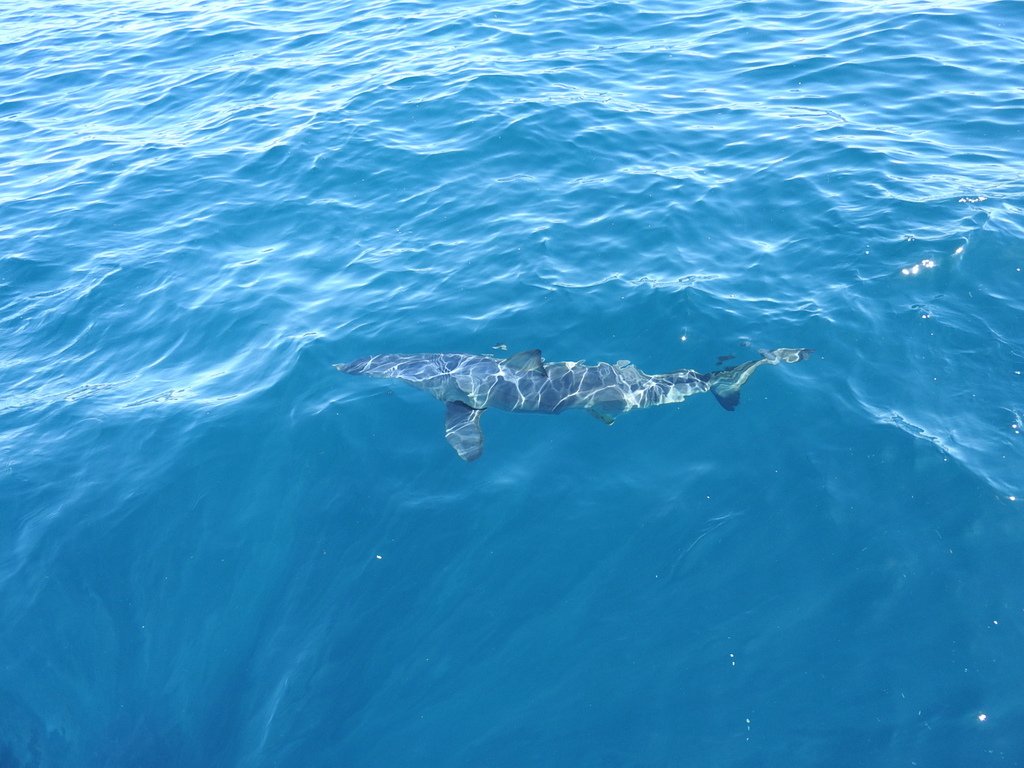
Mako Sharks are not only one of the fastest fish in the ocean, but they’re also highly evolved and have a large brain-to-body ratio, razor-sharp teeth, and adapt well to different temperatures. Mako Sharks aren’t afraid to take on fish or other Sharks the same size, or even bigger than them.
With an average length of between 6 and 10 feet and weights up to 1,000 pounds, be prepared for one massive fight if you manage to hook into one of these monsters. While Mako Sharks predominantly hang out in deep offshore areas, it’s not uncommon for them to venture much closer to shore, especially if there’s an abundant food source luring them in. They are known to take long, deep runs but will also scream to the surface for aerobatic leaps and flips.
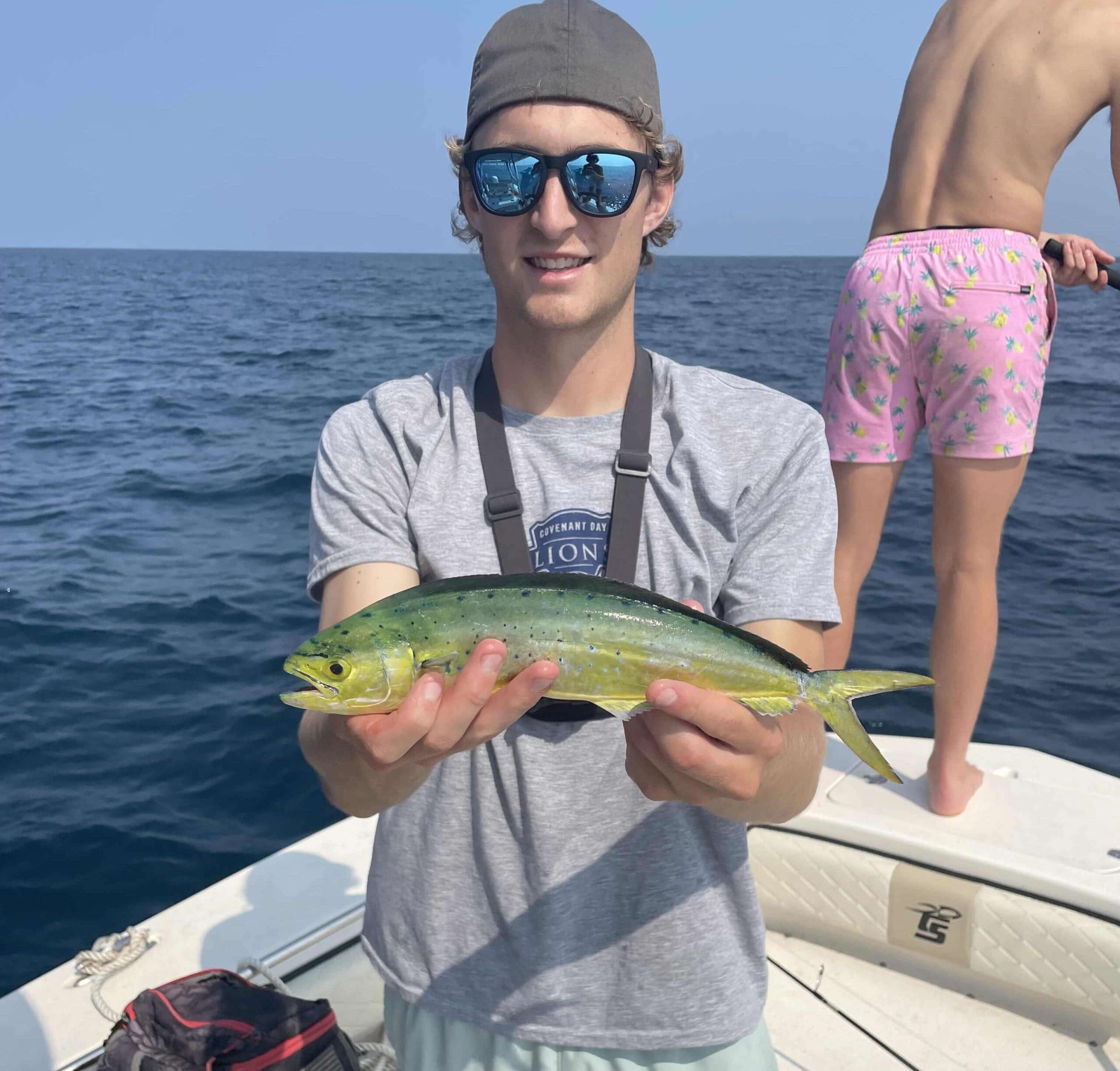
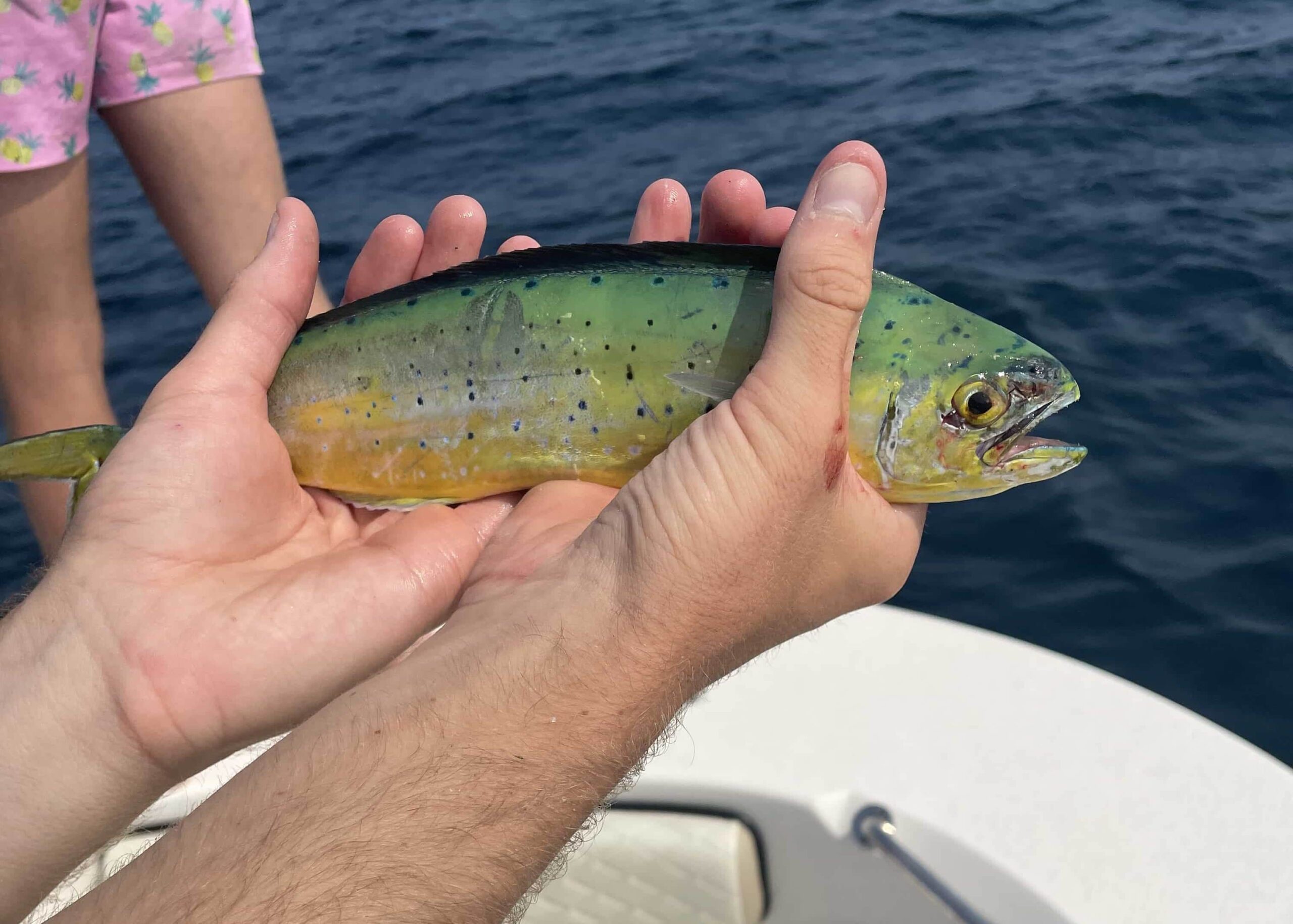
With a large single dorsal fin, Mahi-Mahi, or Dolphin Fish, as they’re more commonly known, is built for speed, with a top speed close to 60 mph. You’ll know when you catch one of these beautiful fish thanks to their vibrant and colorful array of blues, greens, and yellows.
With an average length of between 2.5 to 4.5 feet and a normal weight range between 15 to 40 pounds, the Dolphin Fish will test your skills as an angler as they take impressive runs, leaps, and flips. Found throughout the Atlantic, Pacific, and Indian Oceans, in tropical and subtropical waters, Mahi-Mahi not only look amazing, but they’re also extremely fun to catch at the same time.
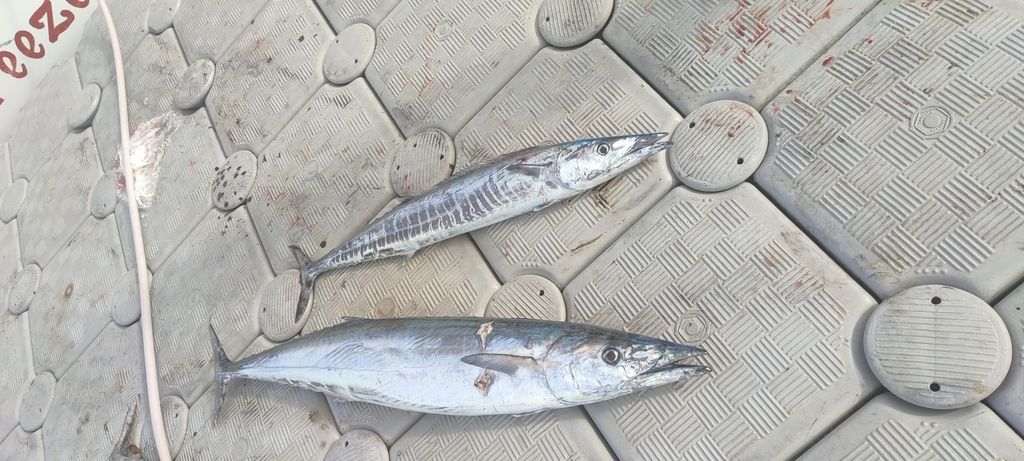
With a row of razor-sharp teeth, a large beak, and speed rarely matched in the ocean, Wahoo are an impressive predator. Although they’re fun to catch, most Wahoo caught are bycatch when anglers are targeting other big game species.
Wahoo have an average size of around 2 to 6 feet and typically weigh up to 40 pounds. You’ll find Wahoo in the Pacific, Indian, and Atlantic Oceans, along with the Mediterranean and Caribbean seas and the Gulf of Mexico.
Hooking a Wahoo is easy. They’re not fussy about what they eat, but the real work begins. Wahoo takes a screaming initial run, reeling off hundreds of feet of line in only a few seconds, and they’re not afraid to take the fight to the surface, jumping, leaping, and headshaking in an attempt to throw the hook.
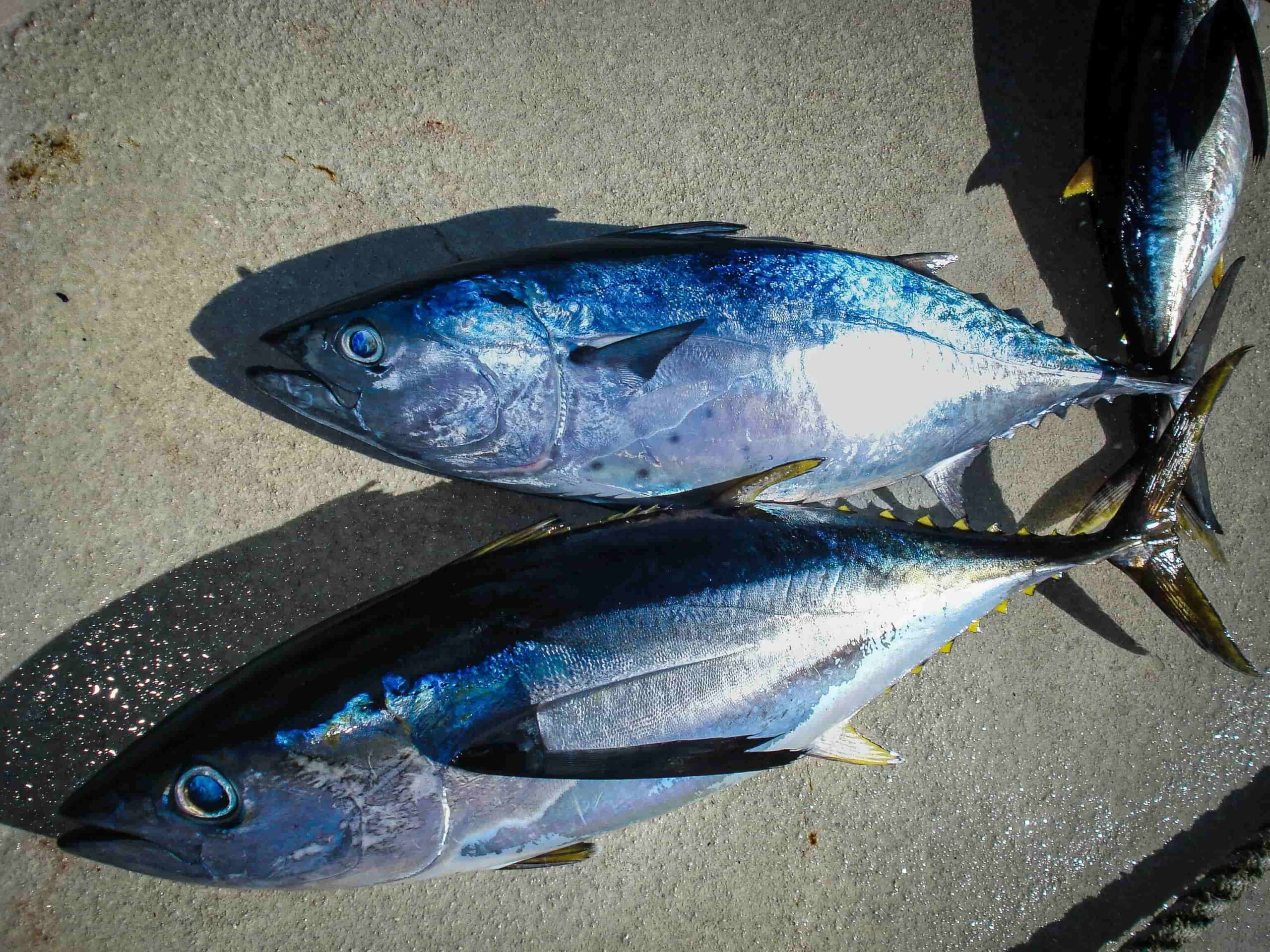
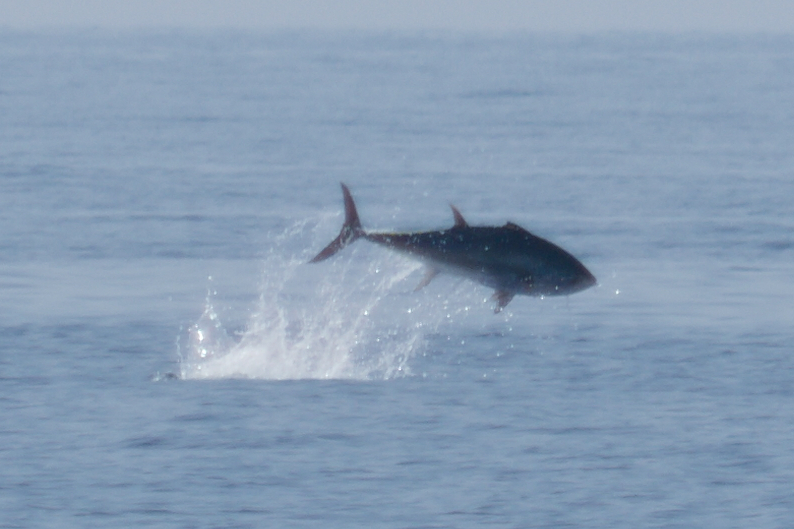
The Yellowfin Tuna gets its speed and stamina from one of the ocean’s most muscular builds, designed purely for efficiency and stamina. The streamlined body allows the Yellowfin Tuna to tuck its fins into its body and take some screaming runs, heading down deep toward the safety of the bottom of the ocean.
Not only are they fun to catch, but Yellowfin Tuna are also highly prized for their delicious taste. Yellowfin Tuna can be found in both warm and cool waters, making them a global fish highly sought after by anglers worldwide.
In the table below, we’ll compare some of the world’s fastest fish, including their top speeds, and also some of the most common environments in which to catch them. While some fish may be found in tropical and subtropical waters only, other fish, like Mako Sharks and Yellowfin Tuna, adapt well to both warm and cool waters, significantly increasing their range.
| Fish | Speed | Habitat |
| Black Marlin | 129 kph / 82 mph | Indian and Pacific Oceans |
| Sailfish | 110 kph / 68 mph | Florida, Bermuda, Mexico, Curacao, Hawaii, Papua New Guinea, and the Philippines. |
| Mako Shark | 95 kph / 60 mph | Worldwide – Tropical and Cool Water |
| Mahi-Mahi/Dolphin Fish | 91 kph / 57 mph | Atlantic, Pacific, and Indian Oceans, in tropical and subtropical waters |
| Wahoo | 80 kph / 50 mpg | Pacific, Indian, and Atlantic Oceans, along with the Mediterranean and Caribbean seas and the Gulf of Mexico |
| Yellowfin Tuna | 75 kph / 46 mph | Worldwide – Tropical and Cool Water |
Did you know that there are actually 11 different species of Marlin, with the Black Marlin, Blue Marlin, and Striped Marlin being the most common of the species? Marlin is part of the Istiophoridae family and is also closely related to the Swordfish.
As we previously mentioned, a Black Marlin was recorded at speeds up to 82 mph, but their average cruising speed is closer to around 40 mph. The female Black Marlin has an average lifespan of around 11 years, but their partner, the male Black Marlin, typically only lives to around 5 years. You can tell the age of a Black Marlin by looking at the rings located on the spine of its dorsal fin.
While Black Marlin can be found in most tropical and subtropical oceans, like the Indian and Pacific Oceans, they like to congregate around coral outcrops, bommies, reefs, and structures. The Black Marlin utilizes their large bill to stun their prey before devouring them, allowing them to quickly strike multiple baitfish before moving on to their next meal.
Both Striped Marling and Blue Marlin have an average speed close to 50 mph, making them another exciting fish heavily targeted by anglers, with
Fishing for the fastest fish in the world doesn’t come with its own unique challenges. One of the biggest challenges chasing the world’s fastest fish is getting to where the fish are. Without a large financial investment into a sea-worthy boat big enough to chase these speedsters, it’s almost impossible. However, that’s not the only way to get out on the ocean.
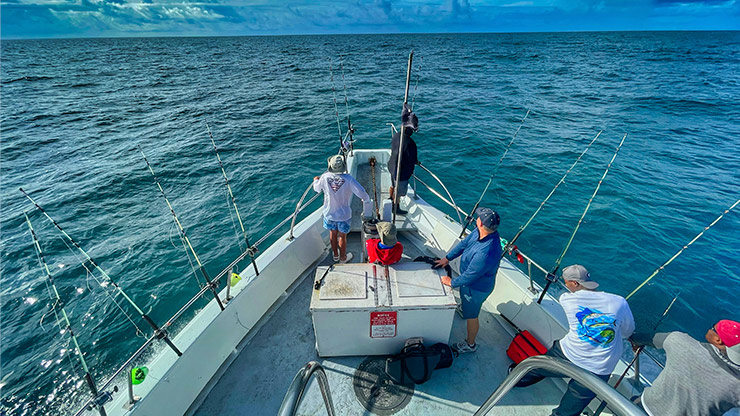
Luckily, these days, where you find big gamefish, a charter boat and a captain aren’t far away. While it can be a little expensive and require a lot of planning, hiring a charter boat, especially if you organize it with a group, can be much cheaper than buying a boat and all the gear yourself.
In this section, we’re going to cover some tips and tricks you should be aware of before you head out into the ocean to chase the world’s quickest fish.
If you know how much pressure the drag is applying to your reel and line while you’re fighting a big fish, you’ll know how close to the breaking point you are and when to increase or reduce your drag.
Regularly check your drag pressure while you’re trolling to ensure that it hasn’t been bumped or knocked out of the correct setting. It’s easy for someone to brush against the drag lever and alter your drag setting, and the last thing you want is to get a strike and have your line instantly break.
Not only should you clip yourself to the game chair, but you should clip yourself to the rod and reel, especially if you’re in the process of moving the rod and reel from one-rod holder to another or moving around the back deck of the boat during a big swell.
While fighting a monster, Black Marlin can take hours. Actually, trolling for them and waiting for a hookup can take even longer, so be prepared for a long day or days out on the water. Ensure you bring clothes to protect you from the sun, sunscreen, sunglasses, a hat, lots of drinking water, something to eat, and sea sickness tablets if you get a bit queasy out in the ocean.
When a fish strikes, the action on a game fishing boat goes from zero to 100 really fast, so being prepared in advance for what will happen is critical. Know where you’ll be when the fish strikes, whose turn it is to take the rod, where you’ll stand if you’re not up on the rod, and what your role in the fight will be. Look around the deck of the boat and make sure that loose items are correctly stored, such as spare rods, baits, knives, clothing, ropes, lines, gaffs, and anything else that could potentially get tangled up underfoot while you move around the boat.
Read also: How Old Do You Have to Be to Get a Boating License? A Comprehensive Guide
The sailfish is widely regarded as the fastest fish in the ocean, reaching burst speeds of up to 110 km/h (68 mph). Its streamlined body and large dorsal fin allow it to maneuver quickly when hunting prey.
Sailfish are generally faster than marlin. While marlin are powerful and fast swimmers, sailfish have higher recorded top speeds, relying more on speed and agility, whereas marlin combine speed with strength.
The sailfish is faster than the black marlin in terms of top speeds. Both are apex predators built for speed, but sailfish achieve higher peak velocities.
The sailfish is the fish most commonly associated with speeds around 110 km/h, achieved in short bursts to stun or corner schools of baitfish.
No, barracudas reach around 55–60 km/h, which is fast but still slower than the sailfish. Barracudas can, however, launch themselves out of the water, a feat sailfish do not perform.
Bluefin tuna can swim approximately 70–75 km/h. They are built for both speed and endurance, allowing them to migrate long distances and remain formidable predators.
Tuna are generally faster than most sharks. Bluefin tuna can outswim sharks like great whites in straight-line speed due to their streamlined, bullet-shaped bodies, whereas sharks rely more on ambush tactics.
The top 20 fastest fish include sailfish, marlin, swordfish, tuna, wahoo, and barracuda. Rankings vary depending on measurement method (average speed vs. short bursts), but these are all pelagic predators adapted for high-speed hunting in open water.
Fast fish have streamlined bodies, stiff fins, and narrow tails to reduce drag and maximize propulsion. Reef fish prioritize maneuverability, often having flatter or rounded shapes to hide within reef structures. These adaptations reflect their environment and hunting style.
Most fast fish cannot maintain top speed for long durations; their maximum speeds are short bursts used for attacking prey or escaping predators. Sustained speeds are lower but still impressive compared to other marine life.
There you go! Everything you wanted to know about the six fastest fish in the world, from the mighty Mako Shark to the Sailfish and Black Marlin. However, knowing which is the fastest fish in the ocean is just the beginning. Once you know the fastest fish, it’s time to head out into the ocean and start catching them. Are you up to the challenge? Only time will tell!
While you are chasing the fastest fish in the ocean, it’s important to remember the importance of being a responsible angler. Fish, especially large fish such as Sailfish and Black Marlin, are under a lot of angling pressure, so take only what you need and return unwanted fish to the ocean safely. By being responsible anglers following all season, size, and bag limits and keeping only the fish we need, we can all do our part to ensure that future generations of anglers get to enjoy the same, if not better, fishing we enjoy today.
The premium fish forecasting application, Fishbox, will put you in the perfect position to catch some great fish, including some of the fastest fish in the ocean, by analyzing local weather and water conditions and input from local anglers. It utilizes accurate weather, tide, and fishing conditions to predict the best time to get out on the water to catch your target species.
Have you ever mixed it up with some of the fastest fish in the ocean and have tips or tricks you’d like to share with other anglers? Drop a comment below!
Wow! Thinking that when I was younger, I was pondering these questions, and now that I get to write about them, it is just so cool. First things first, fast is cool. I don’t care what a fish looks like or what it takes. Sometimes, just that scream of drag off a reel from a fast fish is more than enough for me.
One of the first things we get in this article is a discussion of how vast the ocean is. God created an expansive universe and ocean filled with life—even crazy fast fish. Additionally, some species of fish seem to have been created for speed. Species like tuna, marlin, and wahoo are just a few that come to mind. They are built like torpedoes designed by God to slice through the depths at extreme speeds. This speed is not only cool for us to marvel at but also serves a purpose—most of the time, this is for hunting prey and other smaller fish species.
Let’s jump into the six fastest fish in the ocean without further delay.
Off the rip, we have the black marlin with a high speed of a car on the interstate—that is nuts. I had no clue fish could even swim this fast. Can you imagine a fish swimming as fast as your car on the highway? That is crazy!
The next fish down stays in the billfish family, and it is the sailfish. Another species on the bucket list is the sailfish, which can reach almost 70 miles an hour. This species’ sheer beauty and power are a sight to behold, and I cannot wait to get my hands on one of these at some point in the future.
The third fastest fish in the ocean is the mako shark. Ever since watching Shark Week at a young age, I’ve been fascinated by the raw power of the mako shark and their acrobatics and looks. I honestly figured the mako would be on this list.
To my shock, I did not expect to see the mahi mahi with a speed of 57 miles per hour on this list. I had no clue this pelagic beauty was so fast. I’ve only caught one small mahi in my life, but I look forward to hooking up with a giant one day and going for a ride.
The fifth fastest fish is the wahoo. Once again, I expected this one to be on the list, which was much higher. I had no clue that the mahi was faster. This is yet another bucket list species.
The yellowfin tuna is the sixth-place fish on this list—another expected species. Looking back now at all these different speedy fish, it’s crazy to think about just how beautiful and unique each one is—and these are just six of the fish in the entire ocean!
The article follows with a helpful graph that says the speed and location of these fish around the globe. It follows with fun facts about individual species, which were cool to learn about.
The last section of this article goes over what to do when you are hooked up to a fast fish. One of the biggest things I would emphasize here is not to react out of fear. These fish are going to rip line off your reel at a rate you didn’t think was possible. That said, prepare your gear beforehand, expect the bite, and know how to adjust and fight the fish from there. Don’t freak out and lock up your drag; you will break off the fish. Just be patient and trust your tackle. I hope you have enjoyed the article and this commentary. As always, good luck and tight lines!

![Where and How to Catch Live Bait for Saltwater Fishing [Expert Guide]](https://imgcdn.fishbox.com/wp-blog/wp-content/uploads/2024/03/spanish-mackerel-fishing-pierce-latta-scaled-1-1.jpg)